ADAS calibration cycle time is controlled by the vehicle-specific procedure, required method, setup measurements, repair readiness, diagnostic state, and usable road or environmental conditions. No universal duration is credible. A shop can reduce preventable delay by completing prerequisites, sharing the VIN and repair context, and confirming the work area or route before dispatch.
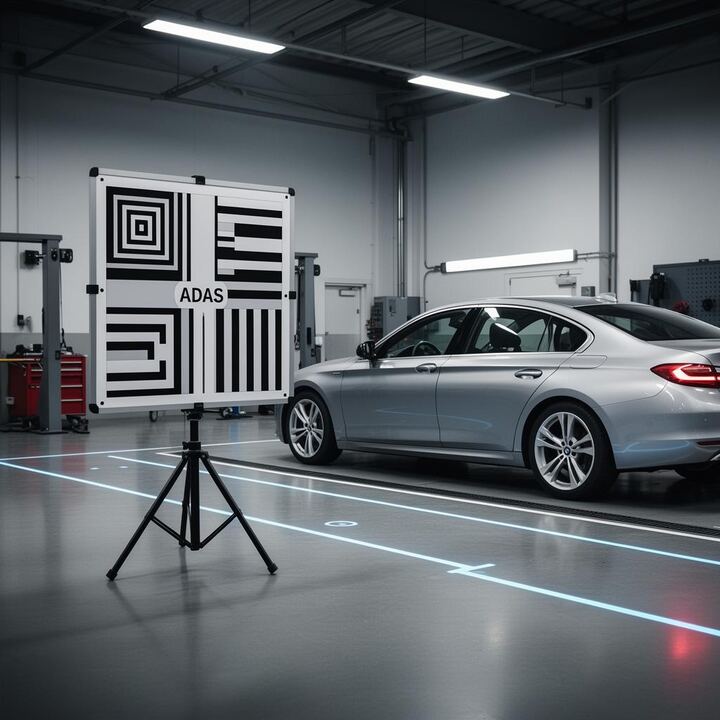
There is no credible universal duration for ADAS calibration. The elapsed time depends on the vehicle-specific procedure, required method, setup measurements, repair readiness, diagnostic state, road or environmental conditions, and what happens when the first directed path does not complete. A useful schedule separates controllable preparation from procedure time and exception time.
I-CAR explains that stationary procedures can be intricate, require precise measurements and target setup, and contain more steps than expected. It also tells repairers to check the service information each time because requirements can change. I-CAR's exact static-calibration article supports scoping time from the current procedure instead of publishing one standard appointment length.
Why is a single time estimate unreliable?
"Calibration" is not one operation. It can describe a stationary aiming process, a directed road process, a combination of both, a system-level camera adjustment, a radar setup, or another learned-reference operation. The procedure can also require preparation, diagnosis, programming, coding, alignment checks, or functional verification outside the core calibration step.
A cycle-time promise made before the VIN and repair context are known leaves out the variables that control the job. A more accurate planning model uses four time buckets:
- Research and scope: identify the installed system, trigger, procedure, method, prerequisites, and expected result.
- Vehicle readiness: complete required repair, mounting, glass, fascia, alignment, tire, loading, and diagnostic conditions.
- Calibration execution: perform the defined setup, measurements, commanded process, and required driving operation.
- Exception and closeout: diagnose a failed attempt, correct a blocker, repeat a permitted path, perform directed verification, and assemble records.
Only the third bucket is the calibration itself. Shops lose cycle time when the other three are assumed to be included but are not complete.
How does stationary calibration affect scheduling?
A stationary procedure occurs with the vehicle stopped in a controlled setup. I-CAR identifies floor space, precise measurements, service information, vehicle preparation, and procedure-specific targets or reflectors among the considerations. I-CAR CRN-1800 also notes that some procedures require a defined amount of flat, open space around the vehicle.
The scheduling questions are therefore concrete:
- Is the required footprint known from the current procedure?
- Is the floor condition within the allowed slope or level requirement?
- Can the space remain clear for setup and performance?
- Is lighting suitable for the directed process?
- Are vehicle centerline, ride height, and other measurements available and repeatable?
- Can doors, lifts, metal objects, traffic through the bay, or other shop activity interfere with the procedure?
If the answers are unknown, the appointment window is not yet reliable. Moving the vehicle after setup, discovering that the footprint is obstructed, or finding that the floor condition is outside the procedure can convert a scheduled calibration into a blocked job.
How does a directed road calibration affect scheduling?
A road procedure depends on conditions the shop controls only partly. The procedure may require particular road geometry, lane markings, speed, visibility, traffic, temperature, weather, or distance. Construction, congestion, rain, snow, glare, darkness, or missing markings can prevent the vehicle from meeting those conditions.
A Mazda service alert for specified 2019 through 2022 Mazda3 and 2020 through 2022 CX-30 applications provides a narrow example. It says the covered dynamic aiming may not complete when lane markings are snow-covered or absent or when the road is too winding. It directs stationary aiming when the dynamic path does not complete or the calibration message returns. The exact NHTSA-hosted Mazda alert supports route planning and a fallback decision for those applications, not a universal Mazda rule.
A MINI bulletin gives another limited example. The covered camera process includes an approximately 20-minute calibration and initialization drive, followed by a sleep period and another road test. It says rain, snow, darkness, sunrise, or sunset can extend the process. The exact NHTSA-hosted MINI bulletin is useful because it shows that a printed drive estimate may cover only one stage and only the stated vehicle condition.
The route plan should identify:
- Required road characteristics.
- Conditions that cancel or pause the attempt.
- A practical alternate route when the procedure allows it.
- Whether the procedure permits another method after an unsuccessful attempt.
- Who decides whether to continue, diagnose, or reschedule.
Which vehicle conditions should be cleared before the clock starts?
I-CAR explains that calibration procedures can depend on limited floor slope, controlled ride height, fuel level, vehicle loading, spare-tire placement, and correct tire size. It warns that failure to meet preparation requirements can miscalibrate the camera or sensor. I-CAR's exact vehicle-preparation article is the basis for treating readiness as part of production planning.
The shop should verify the applicable items before dispatch:
- Final glass, camera, radar, bracket, bumper, grille, mirror, or liftgate installation.
- Final structural and mounting-location repair.
- Final refinish where a sensing zone is involved.
- Alignment and ride-height status.
- Correct tire size, pressure, and loading condition.
- Required fuel or cargo condition.
- Stable electrical condition.
- Communication with the relevant module.
- Resolved faults that the procedure treats as blockers.
- Clean camera view and undamaged sensing surface.
This is a research checklist. The actual procedure decides which items apply and what values are acceptable.
Why can a setup fail after work has already begun?
A procedure may reject the environment or vehicle after setup starts. An Audi bulletin for listed 2019 through 2024 applications addresses an overhead-view camera calibration that could not be completed. It identifies incorrect setup, insufficient lighting, and correction values outside tolerance as possible causes. It also directs checks involving ride height, tire pressure, transport-related conditions, and level-sensor installation. The exact NHTSA-hosted Audi bulletin shows how a job can consume setup time before revealing a vehicle or environment problem.
The schedule should distinguish:
- Setup accepted: the process recognizes the vehicle and environment.
- Setup rejected: a measurement or environmental condition blocks the procedure.
- Procedure failed: setup was accepted, but the operation did not reach the required result.
- Result complete: the procedure returned its successful status and required verification was performed.
Those statuses help the shop decide whether the next action belongs to the calibration provider, alignment operation, body repair, glass correction, diagnostic work, or production manager.
How much exception time should the shop expect?
Exception time cannot be predicted as one standard allowance. It depends on what fails and what the procedure directs next. A General Motors bulletin for a limited camera-relearn condition directs an extended sequence after the relearn does not complete. The sequence includes a vehicle sleep period, connector steps, another learn attempt, and a different route with flat, straight roads and visible markings. The exact NHTSA-hosted GM bulletin is not a general time standard. It demonstrates that a second path can involve diagnosis, waiting, and repeated procedure time.
A scheduling policy should therefore state:
- The initial scope includes only the named procedure and listed prerequisites.
- Diagnosis or corrective repair is not silently absorbed into a calibration promise.
- A failure or blocker triggers a documented stop decision.
- Reattempts occur only when the procedure supports them and the blocking condition is corrected.
- The shop receives a status update before delivery timing is revised.
What information improves the arrival window?
Before booking, the shop should provide:
- VIN, make, model year, and affected system.
- Repair event and parts removed, installed, replaced, repaired, or adjusted.
- Current procedure reference.
- Required method if already identified.
- Alignment, ride height, tire, loading, and fuel status when relevant.
- Relevant diagnostic findings.
- Work-area dimensions and floor condition for a stationary procedure.
- Road and route context for a directed road procedure.
- Any known weather, construction, or access limitation.
Focal ADAS can use that packet to provide an honest scheduling response for mobile work. A request can be sent to service@focaladas.com or discussed at (206) 460-0999. The response should state the assumed readiness conditions and what will happen if the procedure cannot start or complete, rather than presenting one duration as universal.
Frequently asked questions
How long does an ADAS calibration take?
There is no reliable universal duration. Time depends on the exact vehicle procedure, setup, prerequisites, diagnostic condition, method, road or environmental conditions, and whether the first prescribed path completes.
Why can a dynamic calibration take longer than planned?
Traffic, construction, weather, visibility, lane markings, speed, and road geometry can prevent the vehicle from meeting the procedure. A failed attempt may also require diagnosis, another route, or a different allowed method.
What can a shop prepare before mobile calibration?
The shop can complete named repairs, confirm alignment and ride height, resolve blocking faults, set tire and loading conditions, clear the required work area, and provide road access. Every item remains subject to the current procedure.
Does static calibration always take longer than dynamic calibration?
No. Static and dynamic methods have different variables, and neither has a universal time advantage. A static setup can be measurement-intensive, while dynamic work can be delayed by roadway or weather conditions.
Should diagnosis be included in the promised calibration window?
Not automatically. Diagnosis, corrective repair, programming, coding, and repeated procedures should be scoped separately unless the actual request includes them. The schedule should state what happens if the vehicle is not ready or the procedure fails.
Sources
- I-CAR, Considerations for Static Calibration, CRN-1800 https://rts.i-car.com/crn-1800.html
- MINI service bulletin, camera calibration conditions, NHTSA document MC-10151348-9999 https://static.nhtsa.gov/odi/tsbs/2016/MC-10151348-9999.pdf
- Mazda service alert, forward-camera dynamic aiming, NHTSA document MC-10215253-0001 https://static.nhtsa.gov/odi/tsbs/2022/MC-10215253-0001.pdf
- I-CAR, Preparing the Vehicle for Calibration, CRN-1202 https://rts.i-car.com/crn-1202.html
- Audi overhead-view camera bulletin, NHTSA document MC-10233617-0001 https://static.nhtsa.gov/odi/tsbs/2023/MC-10233617-0001.pdf
- General Motors extended camera relearn bulletin, NHTSA document MC-10237357-0001 https://static.nhtsa.gov/odi/tsbs/2023/MC-10237357-0001.pdf
Focal ADAS handles it on-site, same day, from Seattle to Tacoma.
Put calibration on autopilot.
Request a calibration in 60 seconds. A reply with an arrival window comes back within the hour.