Hidden ADAS inputs that can change a collision repair plan include sensor brackets, mounting surfaces, windshield camera locations, bumper sensing zones, wheel alignment, ride height, steering references, and shared chassis data. An estimator should map the repaired area to those dependencies, then use current vehicle-specific information to decide the required inspection, repair, calibration, or test.
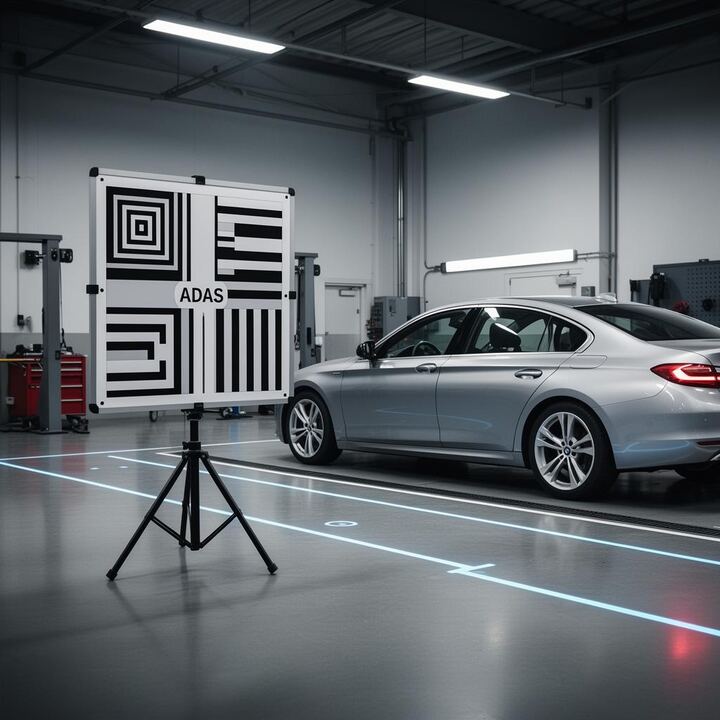
The easiest ADAS inputs to miss are not always the sensors themselves. Brackets, mounting surfaces, glass geometry, bumper transmission zones, mirror and body attachment points, wheel alignment, rear toe, ride height, tire condition, and shared control inputs can change a calibration decision. An estimator should screen the repair by sensor zone and reference change, then verify the current VIN-specific procedure.
This is not a list of automatic calibration triggers. It is a damage-analysis screen designed to prevent a procedure from being missed because the visible sensor survived.
Which front-end conditions can affect forward radar?
Forward radar is commonly associated with a unit behind a bumper cover, grille, emblem, or another front closure. The less obvious issues are the parts that position it and the materials through which it transmits.
I-CAR's forward-radar guidance says sensor replacement normally requires calibration and identifies bumper or grille removal, front structural repair, and sensor removal and installation as events that may also require calibration. It notes that methods vary and that metal objects can interfere with some stationary procedures. The exact I-CAR forward-radar article supplies the screening categories, while the vehicle-specific procedure decides the actual requirement.
The estimate should investigate:
- Radar bracket deformation, replacement, loosening, or adjustment.
- Damage to the bracket's mounting panel or fasteners.
- Front rail, apron, upper tie bar, lower structure, or closure-panel movement that can change the radar reference.
- Grille, emblem, fascia, absorber, reinforcement, or trim work in the transmission path.
- Refinish, filler, repair material, film, accessories, or contamination in the sensing zone.
- Sensor removal and installation even when the sensor itself is reused.
The key question is whether the repair changed the component, its mounting reference, or the material in front of it.
Which rear-corner conditions can affect blind-spot radar?
Blind-spot radar is often hidden behind the rear bumper cover or located near the quarter-panel corner. I-CAR identifies sensor removal, bumper-cover removal, and mounting-location damage as events that may require aiming. It also explains that some procedures are functional tests rather than calibrations. The exact I-CAR blind-spot article supports treating the rear corner as a sensing zone, not only a cosmetic bumper area.
The damage plan should capture:
- Bumper-cover removal or replacement.
- Corner impact near a radar mount even when the cover rebounds.
- Quarter-panel, rear body, side-member, bracket, or mounting-tab damage.
- Repair, filler, refinish, film, or attachments in front of the sensor.
- Sensor contamination or overspray.
- A changed bumper profile or altered fit at the corner.
The estimator should also identify whether the OEM calls the closeout operation aiming, calibration, adjustment, learning, or a functional check. Those terms should not be substituted for one another.
Why do brackets and mounting surfaces need their own line?
A sensor can be undamaged while the part that locates it is bent. I-CAR explains that even one degree of angular error can create a miss of many feet at distance and can keep the related system from responding as designed. I-CAR CRN-1389 is the technical basis for documenting mounting geometry rather than relying on appearance.
Useful repair-plan lines may include:
- Inspect named sensor bracket and mounting points after collision impact.
- Measure or verify surrounding structure where the procedure requires it.
- Replace a nonrepairable or single-use bracket when directed.
- Complete bracket or mounting-panel repair before calibration.
- Record fastener, locator, or adjustment status when it affects the procedure.
"Sensor not damaged" is not enough if the reference surface changed. The mounting part should be treated as a separate damage-analysis item.
How can wheel alignment, rear toe, and ride height change the decision?
Driver-assistance components can reference the vehicle's direction of travel, thrust line, steering input, or body attitude. I-CAR's wheel-alignment discussion specifically addresses forward cameras, radar, steering-angle sensors, rear-toe changes, wheel and tire packages, and differences among manufacturers. It asks whether ADAS can appear normal when an input is wrong and directs repairers to vehicle-specific information. The exact I-CAR alignment article supports research after geometry changes without claiming that every alignment requires every calibration.
The estimator should record:
- Whether suspension, steering, subframe, axle, wheel, or tire work is in scope.
- Whether four-wheel measurements are required before the calibration decision can be made.
- Whether rear toe or thrust angle changed.
- Whether ride height, suspension position, or loading is outside the required condition.
- Whether the steering-angle input requires a separate initialization or verification.
- Whether the calibration procedure requires alignment to be within specification without requiring a new alignment on every job.
Alignment should not be added automatically, and it should not be omitted automatically. The procedure and actual measurement decide.
What can windshield and mirror-area work change?
A windshield can carry the camera bracket, define the optical path, and position rain, light, camera, or other components. The visible glass replacement is only one part of the research.
I-CAR says its calibration search can identify sensor locations and events such as glass or camera removal and replacement. It also says that the search cannot replace the OEM repair procedure. I-CAR's exact windshield article supports documenting the trigger and then retaining the actual glass and camera procedures.
The estimate should examine:
- Windshield removal, replacement, or reinstall.
- Camera removal and installation.
- Camera bracket replacement, bonding, deformation, or incorrect position.
- Mirror cover, shroud, trim, or one-time-use parts that affect installation.
- The viewing area, tint band, contamination, distortion, or obstruction.
- Glass specification and installation materials when the OEM makes them part of the repair requirement.
- Tire, ride-height, alignment, lighting, or road conditions referenced by the camera procedure.
If a mirror assembly contains a surround-view or lane-change camera, mirror replacement can create a separate camera-calibration question even when the windshield camera is untouched.
Why do bumper paint, filler, film, and repairs need early research?
Radar transmits through a defined material zone. Changes in thickness, composition, shape, contamination, or attachments can affect what the OEM permits before calibration.
A current Stellantis position statement says repairs near blind-spot sensors can cause false activation or improper function. For the covered context, it limits substrate repair and filler near the sensor mounting area, identifies coating-thickness restrictions, and calls for the service-information calibration or initialization before delivery. The exact FCA US position-statement PDF is a concrete example of a cosmetic-looking operation changing electronic planning.
Kia guidance provides a different make-specific example. It warns that paint repair, iron-containing filler, foreign objects, impact damage, or movement near rear-corner radar can affect performance and directs inspection of the radar and bracket after impact. The exact I-CAR Kia bumper article reinforces why one make's paint or repair rule should never be copied to another.
The repair-versus-replace decision should be resolved before calibration. A successful aiming process does not override an unpermitted bumper repair in the transmission area.
Which shared inputs can make one repair affect several systems?
A camera or radar input can support more than one named driver-assistance function. The estimator should avoid planning by consumer feature name alone. A forward camera may contribute to lane, sign, braking, or cruise functions. A rear-corner radar may contribute to blind-spot and cross-traffic functions. A surround-view system may use cameras attached to mirrors, bumpers, a liftgate, or another body part.
The useful planning unit is the physical component and its procedure, not the dashboard menu label. The estimate should map:
- Component location.
- Body part or glass that carries it.
- Repair operations affecting that location.
- Systems that rely on the component when identified by the OEM.
- Separate calibration, coding, scanning, or test steps.
What is a practical estimator walkaround?
The estimator can use a zone-by-zone screen during blueprinting:
- Windshield and roofline: glass, camera, bracket, mirror, shroud, roof or header movement.
- Front center: radar, grille, emblem, fascia, absorber, bracket, reinforcement, front structure.
- Front corners: corner radar, parking sensors, lamps, fascia profile, brackets, apron or suspension damage.
- Side mirrors and doors: camera, mirror assembly, door shell, hinges, mounting position, wiring.
- Rear corners: blind-spot radar, bumper, quarter, rear body, brackets, refinish and contamination.
- Liftgate or deck lid: rear-view and surround-view cameras, hinges, latch, body attachment points.
- Chassis references: alignment, thrust angle, rear toe, ride height, tires, loading, steering input.
- Electronic sequence: scans, programming, coding, calibration, functional test, remaining faults.
Each flagged item should lead to a procedure search, not an automatic charge. Focal ADAS can review the VIN, damage zones, removed or replaced components, alignment status, and current procedure reference before a mobile request. Shops can send the packet to service@focaladas.com or call (206) 460-0999.
Frequently asked questions
Can an undamaged sensor still create a calibration issue?
Yes. The component can remain intact while its bracket, glass mount, fascia zone, surrounding structure, alignment, or ride-height reference changes. The estimator should research those dependencies for the VIN.
Why does bumper refinishing matter to radar?
Radar operates through a designed sensing area, and some OEM procedures restrict coating, filler, substrate repair, attachments, or contamination in that zone. The applicable make and vehicle limits must be used instead of a generic bumper rule.
Does every wheel alignment require ADAS calibration?
No. Requirements vary by OEM, vehicle, installed systems, and the alignment operation performed. The estimator should record what geometry changed and verify the current procedure before scheduling any calibration.
What should be inspected near a windshield camera?
The repair plan should address the glass, camera holder, viewing area, camera installation, connectors, trim, and any named bracket checks. It should then follow the current camera procedure for calibration and closeout.
How can a shop find hidden ADAS dependencies early?
The blueprint should map each damaged or removed area to installed sensors and shared inputs, inspect mounting references, follow linked procedures, and separate replacement, alignment, coding, scanning, calibration, and functional checks.
Sources
- I-CAR, Typical Calibration Requirements for Forward Radar Sensors, CRN-461 https://rts.i-car.com/crn-461.html
- I-CAR, Typical Calibration Requirements for Blind Spot Sensors, CRN-466 https://rts.i-car.com/crn-466.html
- I-CAR, Even One Degree: ADAS Calibration, CRN-1389 https://rts.i-car.com/crn-1389.html
- I-CAR, I-CAR Repairers Realm: ADAS Calibrations After Wheel Alignment - Now Available, CRN-2098 https://rts.i-car.com/crn-2098.html
- I-CAR, Calibration After Windshield Replacement, CRN-801 https://rts.i-car.com/crn-801.html
- FCA US, Bumper/Fascia Repair With ADAS position statement https://rts.i-car.com/images/pdf/oem-info/chrysler/position-statements/83311.pdf
- I-CAR, Bumper Cover Repair With ADAS: Kia, CRN-1491 https://rts.i-car.com/crn-1491.html
Focal ADAS handles it on-site, same day, from Seattle to Tacoma.
Put calibration on autopilot.
Request a calibration in 60 seconds. A reply with an arrival window comes back within the hour.