A collision shop needs a clear, reasonably level floor area, adequate lighting, the footprint required by the current OEM procedure, and suitable road access when dynamic calibration is specified. The vehicle must also meet procedure-specific preparation conditions. A pre-dispatch readiness check keeps an unsuitable bay or unfinished repair from consuming the appointment.
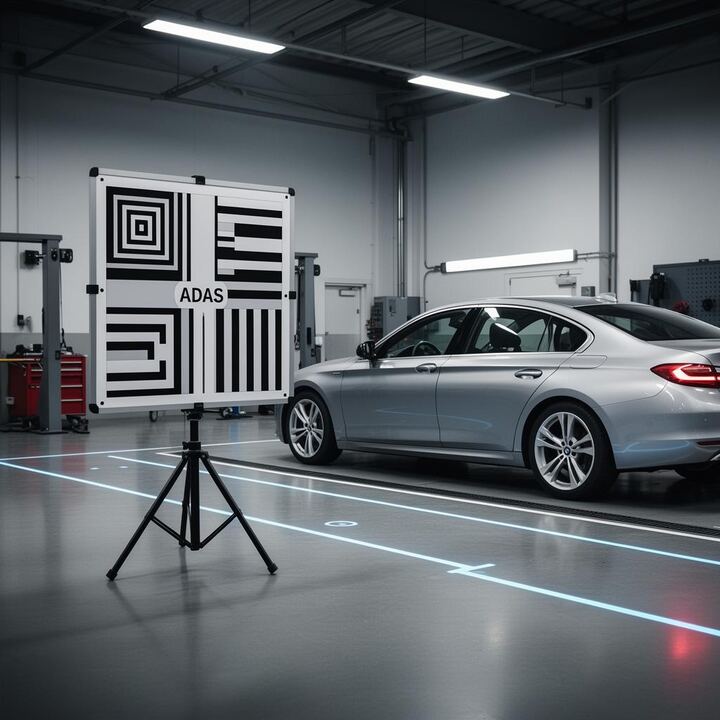
A collision shop needs a clear, reasonably level work area, adequate lighting, the footprint required by the current OEM procedure, and suitable road access when dynamic calibration is specified. The vehicle must also be fully prepared for the procedure. Mobile service changes where the work occurs, not the OEM conditions that govern completion.
The most reliable mobile appointment starts with a readiness check before the technician is dispatched. Bay space, floor condition, lighting, vehicle load, tire condition, alignment status, diagnostic faults, and remaining repair operations can all determine whether the planned procedure can begin or finish.
How much clear floor space does mobile calibration require?
There is no single footprint that applies to every vehicle. I-CAR says some OEMs require a specified distance of flat, open space around the vehicle and instructs repairers to check the service information before beginning. It also says the floor should be clean and clear. I-CAR's static-calibration guidance is the source for that procedure-dependent workspace rule.
The shop should provide a bay with enough room for the vehicle and every reference position named by the procedure. Nearby vehicles, carts, parts, posts, open doors, and production traffic should not intrude into that area. The required footprint may extend in front of, behind, or beside the vehicle, so a standard stall measurement is not a reliable substitute for procedure review.
One Nissan procedure hosted by NHTSA illustrates the range. It calls for a large obstruction-free area, a floor that is as level as possible, and a clean, dry surface, then shows different camera positions that require the vehicle to be repositioned. The NHTSA-hosted around-view calibration bulletin proves that multi-camera work can create a different footprint from a single forward-camera operation.
How level does the floor need to be?
The current OEM procedure supplies the allowable condition. "Reasonably level" is a scheduling screen, not a technical tolerance. I-CAR explains that calibration commonly requires a surface with limited slope or a level surface and that the vehicle itself may need controlled ride height and level. I-CAR's vehicle-preparation guidance connects floor condition to calibration accuracy.
Before booking, the shop should disclose drains, pronounced slope, broken concrete, raised transitions, or other floor features in the proposed area. Focal ADAS can then compare the location with the vehicle procedure. A bay that works for one procedure may not work for another, and moving to a different bay is better planned before the vehicle blocks production.
The shop does not need to invent a universal floor specification. It needs to provide an honest description and keep the proposed surface clear so the applicable requirement can be checked.
What lighting should the shop provide?
The work area should be adequately and consistently lit, without glare or harsh light aimed at the camera or calibration reference. A specific NHTSA-hosted OEM procedure requires the reference to be fully lit, the area to be sufficiently illuminated, glare-producing lamps to be avoided, and surrounding obstacles to be removed. The NHTSA-hosted OEM calibration bulletin provides a concrete example of lighting as a controlled condition.
That example should not be turned into one lighting number for every make. It supports a practical precheck: burned-out fixtures, deep shadows, direct sun, reflective glare, and rapidly changing light can make the chosen space unsuitable for a procedure. The current service information decides the final condition.
For mobile scheduling, the shop should identify whether the bay relies on daylight, whether doors must remain open, and whether production staff can keep lighting stable during the appointment. This information helps prevent a setup from being abandoned after the vehicle is already in position.
What vehicle preparation should be complete before arrival?
Vehicle readiness varies by OEM, but it must be researched before calibration. I-CAR lists examples that can include tire pressure, fuel level, vehicle load, ride height, fluid levels, spare-tire placement, tire size, and instructions about occupants during the procedure. I-CAR's preparation article makes clear that these are application-dependent conditions.
I-CAR also reports that pre-calibration requirements can concern both the workspace and the vehicle. Its vehicle-specific examples include an unloaded condition, specified tire pressures, fluid and fuel conditions, and alignment completed before a radar procedure. I-CAR's pre-repair calibration review shows why the estimator should identify prerequisites before assigning the calibration date.
The shop readiness list should confirm:
- Structural, glass, refinish, bumper, mirror, suspension, alignment, and tire operations that affect the procedure are complete.
- The vehicle is assembled in its final repair configuration.
- Tire pressures, load, fuel, fluids, and ride height can be set as required.
- Camera views and sensor areas are clean and unobstructed.
- Blocking diagnostic faults have been investigated.
- The VIN, repair order, and affected-component list are available.
If a prerequisite is not complete, the appointment should be moved rather than forcing a partial procedure into the production schedule.
What road access is needed for dynamic calibration?
Dynamic calibration requires a route that can satisfy the conditions in the OEM procedure. I-CAR states that dynamic procedures can specify speed, road conditions, clear lane markings, time of day, weather, and surrounding objects. It also notes that dynamic calibration is different from an ordinary test drive. I-CAR's dynamic-calibration guidance supports treating road access as a planned resource.
The shop should disclose immediate route constraints such as construction, persistent congestion, poor markings, or access that makes the specified road condition impractical. A suitable road does not guarantee completion, because weather and traffic can change. It gives the appointment a realistic path to completion and a clear reason for rescheduling if the required conditions are unavailable.
What does the shop provide on the appointment day?
The practical handoff is concise: a clear reasonably level floor space, adequate lighting, the footprint required by the OEM procedure, suitable road access for a dynamic process, a prepared vehicle, and a knowledgeable shop contact. I-CAR's workspace guidance says both space and an empty area can be prerequisites because surrounding objects may interfere. I-CAR's pre-repair workspace article supports protecting the bay for the duration of the procedure.
The body-shop service page explains Focal ADAS's shop-facing workflow. Method planning belongs on the static and dynamic recalibration page, while the partner-vetting guide can help managers build a repeatable handoff. A shop can use the contact page to send appointment details.
Focal ADAS serves collision shops along the Seattle to Tacoma corridor. The VIN, repair scope, bay description, and requested date can be sent to service@focaladas.com, or the shop can call (206) 460-0999.
Frequently asked questions
Is there one minimum bay size for mobile ADAS calibration?
No. I-CAR says some OEM procedures require a specified distance of flat open space around the vehicle. The required footprint depends on the exact camera or sensor procedure and can extend in front of, behind, or beside the vehicle.
Can a bay with a drain or noticeable slope be used?
Only if the applicable OEM procedure allows the actual floor condition. A reasonably level surface is a scheduling screen, while the procedure supplies the technical requirement. The proposed bay should be described before dispatch so a different space can be chosen if needed.
What lighting is needed for mobile camera calibration?
The area should have adequate stable lighting without glare or direct light that interferes with the camera or reference. A specific NHTSA-hosted OEM procedure requires full reference illumination, sufficient area lighting, glare control, and obstacle removal, but every vehicle needs its own procedure checked.
Does mobile dynamic calibration require nearby road access?
Yes. The route must be capable of meeting the OEM conditions for speed, road type, lane markings, weather, traffic context, and other stated factors. Immediate construction or unsuitable markings should be disclosed before the appointment.
What information should a shop send before mobile calibration?
The shop should send the VIN, repair order, affected components, completed operations, alignment and glass status, diagnostic findings, proposed bay condition, road-access context, and requested date. That package supports procedure research and a useful readiness check.
Sources
- I-CAR considerations for static calibration https://rts.i-car.com/crn-1800.html
- I-CAR preparing the vehicle for calibration https://rts.i-car.com/crn-1202.html
- I-CAR OEM pre-repair calibration requirements https://rts.i-car.com/crn-1529.html
- I-CAR dynamic calibrations compared with a test drive https://rts.i-car.com/crn-1056.html
- NHTSA-hosted Nissan around-view camera calibration bulletin https://static.nhtsa.gov/odi/tsbs/2025/MC-11013278-0001.pdf
- NHTSA-hosted OEM two-stage ADAS calibration technical bulletin https://static.nhtsa.gov/odi/tsbs/2019/MC-10162578-9999.pdf
Focal ADAS handles it on-site, same day, from Seattle to Tacoma.
Put calibration on autopilot.
Request a calibration in 60 seconds. A reply with an arrival window comes back within the hour.