ADAS calibration should be researched during blueprinting, scheduled around the verified prerequisites, performed after repairs that establish sensor position and vehicle geometry are complete, and documented before delivery. The exact sequence is vehicle-specific. A readiness check before dispatch prevents incomplete alignment, coding, mounting, diagnostic, or road-condition issues from turning into avoidable rework.
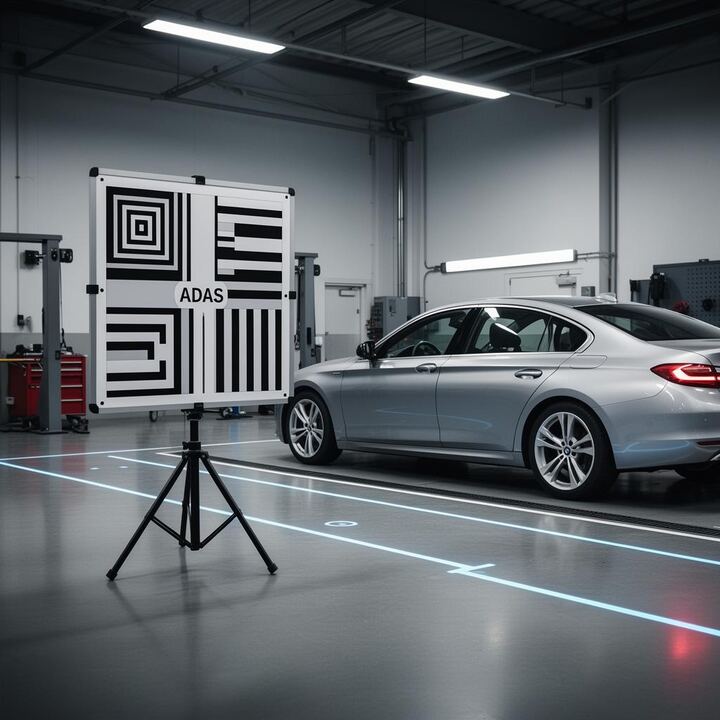
ADAS calibration should enter the repair plan during blueprinting, but it should be performed only after the vehicle reaches the state required by the current procedure. That usually means the affected parts, mounting references, glass, fascia, structure, alignment, tires, loading, electrical condition, and blocking faults are complete or resolved as directed. The correct sequence is procedure-specific.
I-CAR's scan-versus-calibration guidance recommends identifying the affected parts, listing the required processes, and including the actual OEM procedure when possible. It also says sensors or modules often do not know they were replaced or that calibration is required. The exact I-CAR article supports planning the operation from the repair event rather than waiting for a delivery-day warning.
When should calibration first appear in the blueprint?
Calibration research should start when damage analysis identifies an affected sensor, camera, bracket, glass, body attachment point, bumper transmission zone, alignment reference, or procedure-linked component. The operation may be scheduled later, but its prerequisites can affect parts ordering, sublet planning, bay use, route planning, supplements, and promised delivery.
The blueprint should record:
- VIN and vehicle configuration.
- Named component and location.
- Actual collision or repair event.
- Current procedure title or identifier.
- Trigger for calibration, aiming, initialization, coding, or another directed operation.
- Required production stage.
- Prerequisites and closeout evidence.
- A plan for failure, blockage, or a changed repair scope.
The early decision is "research and reserve the operation," not "perform it immediately."
Why can the first repair procedure hide a later calibration step?
Calibration requirements can appear in linked component instructions rather than the first glass, bumper, or replacement page. I-CAR documents this with Stellantis examples. For a 2020 Chrysler Pacifica, the windshield procedure directs camera removal while the linked camera information contains the calibration requirement after camera or windshield work. A 2022 Jeep Grand Cherokee installation procedure separately directs the repairer to the camera calibration process. The exact I-CAR repair-planning article shows why the estimator must follow the procedure chain before finalizing production order.
A reproducible research path is:
- Open the primary repair procedure.
- Follow every linked removal, installation, programming, coding, calibration, and test instruction related to the affected component.
- Record the sequence and prerequisites.
- Retain the exact document reference used for each estimate line.
If calibration appears only in a linked procedure, the estimate note should identify that path. This prevents a later reviewer from stopping at the first page and concluding that the operation was unsupported.
Which repairs should be finished before calibration?
The answer comes from the current procedure, but the common production categories include:
- Final structural repair and measurements that establish the mounting reference.
- Final bracket, fastener, sensor, camera, glass, mirror, liftgate, grille, and bumper installation.
- Final refinish or permitted repair in radar transmission areas.
- Completed alignment or verification that alignment is within specification when directed.
- Required ride height, tire size, tire pressure, fuel, loading, and spare-tire condition.
- Stable electrical condition.
- Required programming or configuration completed before aiming.
- Communication with the relevant module and resolution of blocking diagnostic conditions.
- Clean viewing and sensing areas.
I-CAR's vehicle-preparation article identifies level or limited-slope surfaces, controlled ride height, fuel, cargo, spare-tire placement, and tire size as conditions that procedures can specify. I-CAR CRN-1202 explains why an assembled-looking vehicle may still be unready.
The production manager should not release the vehicle for calibration merely because paint is dry or parts are installed. The readiness gate should reflect the actual procedure.
Where do programming and coding belong in the sequence?
Programming, configuration, coding, and calibration can be separate directed steps. A General Motors bulletin limited to specified 2019 pickups lists module programming, module configuration, and module calibration as three required operations for its front-camera event. The exact NHTSA-hosted GM bulletin demonstrates that order can matter without creating a rule for other vehicles.
A Kia bulletin for listed 2019 through 2022 model ranges provides another narrow sequence example. It calls for camera-replacement steps, variant coding, a directed software operation when applicable, calibration, diagnostic checks, and confirmation of normal operation. The exact NHTSA-hosted Kia bulletin should not be extended beyond its applications, but it shows why aiming should not be booked before a required configuration step is complete.
The estimate and work order should therefore separate:
- Pre-repair diagnostic scan.
- Component installation.
- Programming or software operation.
- Configuration or variant coding.
- Calibration or aiming.
- Functional verification.
- Post-repair scan and remaining-fault resolution.
One line should not silently stand in for all seven.
When should road conditions be checked?
Road conditions should be checked before dispatch whenever the procedure uses a directed driving process. The shop should know the required route characteristics, acceptable weather and visibility, traffic limitations, and what the procedure directs if the operation does not complete.
A Mazda alert for specified 2019 through 2022 Mazda3 and 2020 through 2022 CX-30 applications says dynamic aiming may not complete when lane markings are snow-covered or absent or when the route is too winding. It directs stationary aiming when the dynamic process does not complete or the calibration message returns. The exact NHTSA-hosted Mazda document supports route and fallback planning for those vehicles.
The dispatch note should identify:
- Required road characteristics.
- Known construction or closure issues.
- Weather or visibility limits.
- A suitable alternate route when allowed.
- The status to report if conditions prevent a valid attempt.
This prevents a road-dependent procedure from being treated as a guaranteed completion within a fixed window.
What is a useful ready-for-calibration gate?
The shop can use a three-part gate.
### Is the repair state ready?
- Required parts and mounts are installed.
- Structural, glass, body, bumper, refinish, suspension, steering, and alignment work is at the directed stage.
- No technician plans to remove or adjust the affected component after calibration.
### Is the vehicle state ready?
- Tires, pressure, ride height, fuel, loading, battery, and other conditions match the procedure.
- Relevant modules communicate.
- Blocking diagnostic conditions are resolved.
- The viewing or transmission area is clean and complete.
### Is the environment ready?
- The stationary footprint, floor, lighting, and clearance meet the procedure, or the required road conditions are available.
- The vehicle can remain undisturbed through setup and completion.
- A stop-and-reschedule decision is defined if conditions change.
If any required answer is no or unknown, the vehicle should remain in a blocked status until the issue is assigned and resolved.
What happens when the vehicle is not ready at arrival?
An honest mobile workflow should not force a pass from an unready vehicle. The provider should identify the blocker, preserve any diagnostic or setup evidence, state whether the procedure was not started or failed, and return the next required action.
Useful blocker categories include:
- Procedure or configuration not identified.
- Repair incomplete.
- Component or mounting damage unresolved.
- Alignment, ride height, tire, loading, or electrical condition outside the procedure.
- Relevant module not communicating.
- Required setup area unavailable.
- Road or environmental conditions unsuitable.
- Provider authorization or service access not confirmed where the OEM restricts it.
The shop should then decide whether the next action is body repair, glass correction, alignment, diagnosis, coding, environmental rescheduling, or reassignment.
What should happen after calibration and before delivery?
The final sequence should retain the calibration result and complete every separate closeout operation directed by the vehicle information. I-CAR's windshield calibration article says its research result can document required next steps but cannot replace the OEM procedure. I-CAR CRN-801 supports retaining both the research path and the actual instruction used.
The repair file should show:
- Named procedure and component.
- Completion, failure, or blocker status.
- Relevant setup or prerequisite evidence.
- Separate programming or coding result when applicable.
- Relevant post-repair diagnostic status.
- Directed functional verification or road check.
- Any unresolved limitation and assigned next action.
Focal ADAS can review the VIN, procedure, repair stage, scan findings, and readiness packet before a mobile visit. Shops can send the request to service@focaladas.com or call (206) 460-0999. The scheduling response should confirm the assumed production stage so the calibration is not placed before the work that establishes its reference.
Frequently asked questions
Should calibration be researched before repairs start?
Yes. Early research identifies the affected system, trigger, prerequisites, procedure chain, separate operations, and likely scheduling needs. It prevents calibration from becoming an unsupported last-minute addition.
Should calibration happen before wheel alignment?
Only if the verified vehicle procedure allows that order. When alignment or geometry establishes a required sensor reference, the named alignment work should be complete before calibration to avoid repeating the procedure.
Can calibration happen before programming or coding?
The current vehicle procedure controls the sequence. Some applications require programming or configuration before calibration, so production should confirm those operations are complete instead of assuming aiming can occur first.
What happens if the vehicle is not ready at the appointment?
The provider should document whether the procedure was not started, blocked, attempted, or failed and identify the next required step. The shop can then repair, diagnose, correct setup, or reschedule without calling the visit a completed calibration.
What must be in the file before delivery?
The file should contain the calibration requirement, current procedure reference, prerequisite status, named method, identifiable result, related diagnostic closeout, and any unresolved limitation. A scan and a calibration result should remain separate records.
Sources
- I-CAR, The Differences Between Scanning and Calibration, CRN-843 https://rts.i-car.com/crn-843.html
- I-CAR, FCA/Stellantis ADAS Repair Planning: Do You Have All The Information?, CRN-1350 https://rts.i-car.com/crn-1350.html
- I-CAR, Preparing the Vehicle for Calibration, CRN-1202 https://rts.i-car.com/crn-1202.html
- General Motors bulletin, three-step front-camera process, NHTSA document MC-10173960-9999 https://static.nhtsa.gov/odi/tsbs/2020/MC-10173960-9999.pdf
- Kia front-camera replacement bulletin, NHTSA document MC-10200524-0001 https://static.nhtsa.gov/odi/tsbs/2021/MC-10200524-0001.pdf
- Mazda forward-camera dynamic aiming alert, NHTSA document MC-10215253-0001 https://static.nhtsa.gov/odi/tsbs/2022/MC-10215253-0001.pdf
- I-CAR, Calibration After Windshield Replacement, CRN-801 https://rts.i-car.com/crn-801.html
Focal ADAS handles it on-site, same day, from Seattle to Tacoma.
Put calibration on autopilot.
Request a calibration in 60 seconds. A reply with an arrival window comes back within the hour.