A shop should write an ADAS calibration estimate line by naming the affected system, the documented repair trigger, the current vehicle-specific procedure, the required operation, and the evidence expected back. Separate scans, programming, coding, alignment, and calibration when the procedure separates them. Specific wording supports review, but it never guarantees payment.
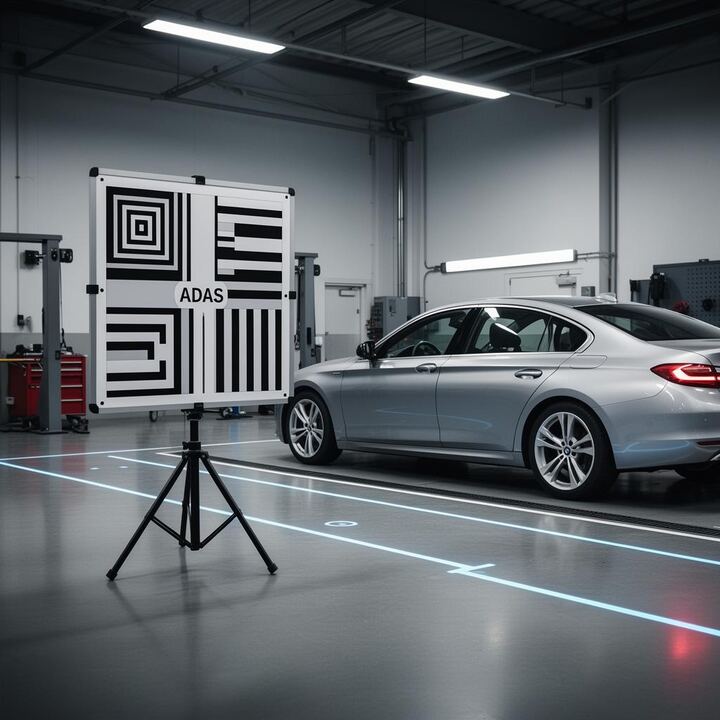
A reviewable ADAS calibration estimate line names the component, the actual repair trigger, the current vehicle-specific procedure, the required operation, and the evidence expected back. It separates scanning, programming, configuration, alignment, calibration, and testing when the procedure separates them. Specific language improves technical review, but it cannot guarantee a payer decision.
The goal is not to make the line sound more important. The goal is to let an estimator, technician, reviewer, and sublet provider reach the same scope without guessing. I-CAR warns that scanning and calibration are not interchangeable and recommends supplying a detailed process list, preferably with the actual OEM procedure. I-CAR's exact scan-versus-calibration article supports writing named operations instead of a vague line such as "scan and calibrate ADAS."
What makes a calibration line technically reviewable?
A strong line contains five elements:
- Affected component or system: forward camera, front radar, rear corner radar, surround-view camera, steering-angle input, or another exact service-information name.
- Repair trigger: the glass, component, bracket, fascia, body part, alignment, diagnostic condition, or other event that occurred.
- Procedure authority: the current vehicle-specific procedure title, section, or document identifier.
- Requested operation: the exact calibration, aiming, initialization, coding, scan, or test directed by that procedure.
- Completion evidence: the VIN-linked result, procedure reference, status, scans, photos, measurements, or other record expected from the performer.
A practical line structure is:
[Operation] [named component] following [actual repair event], per [current procedure identifier]; return [defined result and supporting records].
That structure forces the estimate to state why the operation exists. It also makes later supplements easier to explain because the file already connects the repair event to the procedure.
How should the repair trigger be written?
The trigger should describe what happened to this vehicle, not what can happen in general. Useful trigger language includes:
- Windshield removed and replaced; mirror-area forward camera affected by the glass procedure.
- Front radar removed and installed during grille or fascia repair.
- Rear corner radar mounting area damaged in the collision.
- Side-mirror assembly replaced on a vehicle with a surround-view camera.
- Alignment or rear-toe operation completed where the current procedure directs a related calibration.
- Diagnostic instruction directs calibration after a named fault or replacement event.
The line should avoid unsupported filler such as "for safety," "required on all vehicles," or "manufacturer recommends" when the file does not identify the actual document. The procedure citation is more useful than broad language because it can be reproduced.
I-CAR's windshield calibration article explains that its research search can identify camera location and trigger events, and it can produce documentation of the next steps. It also says the search does not contain the calibration procedure and does not replace OEM information. I-CAR CRN-801 supports citing the exact service procedure on the estimate rather than treating a general lookup as the complete instruction.
Where can the real trigger be hidden in the service information?
The calibration instruction may not appear on the first procedure opened by the estimator. I-CAR documents this with Stellantis examples. In one 2020 vehicle example, the windshield procedure directs removal of the forward camera, while the linked camera information contains the calibration requirement after camera or windshield work. In a later 2022 example, the installation procedure directs the repairer to the camera calibration procedure. The exact I-CAR repair-planning article shows why the planner must follow linked procedures before deciding that a line is or is not required.
The estimate should therefore record the research chain when it matters:
- Primary repair procedure opened.
- Linked component procedure followed.
- Calibration or setup instruction located.
- Prerequisites and closeout steps recorded.
This is especially valuable when a reviewer sees no calibration language on the first glass, bumper, or component page. The estimate note can point to the linked instruction rather than relying on a general statement.
How should programming, coding, and calibration be separated?
Programming, configuration, coding, and calibration can be different steps. A Hyundai example from I-CAR explains that variant coding introduces certain replacement cameras or radar modules to the vehicle and can be required separately from calibration. It also notes that omitted required coding can cause function problems and diagnostic trouble codes. I-CAR's exact variant-coding article supports treating coding as its own operation when directed.
A General Motors bulletin for specified 2019 pickups provides another limited example. It lists module programming, module configuration, and module calibration as three required steps in that front-camera event. The exact NHTSA-hosted bulletin is not a make-wide rule and should not be cited for unrelated vehicles. It demonstrates why one generic line can hide multiple directed operations.
When the procedure separates them, the estimate can use separate lines such as:
- Program identified replacement module per current procedure; retain programming result.
- Configure or code identified module to vehicle variant per current procedure; retain completion record.
- Calibrate named camera or radar after stated repair event; retain identifiable calibration result.
- Perform post-repair scan and resolve or document remaining related findings.
What are useful estimate-line examples?
These are writing patterns, not universal OEM requirements. Each bracket must be replaced with the actual vehicle information.
### How could a forward-camera line read?
Calibrate [OEM component name] after windshield removal and replacement, per [procedure title or identifier]; return VIN-linked completion result, relevant setup evidence, and post-operation diagnostic status.
This wording identifies the glass event, the component, the authority, and the required file return. If the procedure separately requires camera removal, bracket inspection, coding, or a road verification, those operations should be added rather than implied.
### How could a front-radar line read?
Calibrate [OEM radar name] after [sensor removal, bracket work, fascia replacement, or refinish event], per [procedure identifier]; confirm prerequisite alignment or mounting conditions and return the result or blocker.
The trigger must match the actual repair. A fascia refinish should not be inserted if only the sensor was replaced, and a sensor-replacement trigger should not be used if the current procedure bases the requirement on a different event.
### How could a surround-view line read?
Perform [OEM surround-view calibration or camera-setting name] after [mirror, liftgate, bumper, camera, or control-unit event], per [procedure identifier]; return the system-level result and identify any camera or body attachment point that remains unresolved.
This wording helps prevent a rear-view-only camera check from being mislabeled as a complete surround-view calibration.
What prerequisites belong on the estimate?
Prerequisites that affect production order should be visible before dispatch. Depending on the current procedure, the estimate or work note may need to identify:
- Final glass, camera, bracket, bumper, grille, mirror, or liftgate installation.
- Completed structural and mounting-location repair.
- Final refinish in a radar transmission area.
- Alignment, rear toe, ride height, tire pressure, tire size, fuel, or loading conditions.
- Stable vehicle electrical condition.
- Resolved communication faults or diagnostic blockers.
- Clear, reasonably level work space and adequate lighting for a stationary process.
- Suitable road access and environmental conditions for a directed driving process.
These conditions should be copied from the vehicle procedure, not from a universal checklist. The checklist prompts research; it does not replace it.
What result should the estimate require back?
The line should define evidence before the appointment begins. A useful return package identifies:
- VIN and vehicle.
- Named system or component.
- Procedure or document reference.
- Method performed.
- Date and completion status.
- Relevant prerequisite or setup evidence.
- Calibration result.
- Relevant pre-scan and post-scan findings when included in scope.
- Any failure, blocker, limitation, or required next action.
"Vendor invoice" is not a technical completion record. "Calibration passed" without the vehicle, system, or procedure can also be too vague. The returned result should let the shop connect the sublet work to the exact estimate line.
Which wording should an estimator avoid?
Weak lines usually fail because they hide the decision:
- "ADAS calibration" does not name the system or trigger.
- "Scan and calibrate" merges distinct operations.
- "Calibrate as needed" leaves the requirement undecided.
- "No warning lights" describes an observation, not completion.
- "Per OEM" lacks the document that supports the line.
- "Guaranteed approval" promises a payer outcome that documentation cannot control.
Focal ADAS can review a proposed mobile-calibration scope when the shop supplies the VIN, repair event, and current procedure reference. Requests can be sent to service@focaladas.com or discussed at (206) 460-0999. The response should identify missing scope or readiness information before the estimate is finalized.
Frequently asked questions
What is the minimum information in a calibration estimate line?
The line should identify the named system or component, the actual repair event, the current procedure reference, the required operation, and the evidence expected back. Prerequisites and separate electronic operations should also be visible.
Should a shop write “scan and calibrate ADAS” as one line?
That phrase is usually too broad because scanning and calibration answer different questions. The estimate should separate the diagnostic scan, aiming or learning procedure, configuration, and other operations when the vehicle information separates them.
Does a cited OEM procedure guarantee reimbursement?
No. A procedure citation can make the repair rationale clearer, but it does not guarantee a payer decision. The estimate must reflect the actual repair facts, applicable documentation process, and independently reviewable operation.
How should the trigger be described?
The note should name the event that actually occurred, such as the identified glass, component, bracket, alignment, or fascia operation, and connect it to the verified vehicle procedure. Generic safety language should not replace that factual connection.
What result should the estimate request?
The estimate should request an identifiable outcome tied to the VIN, system, procedure, method, and completion status. It should also ask for any blocker or failed step to be stated plainly instead of treating an appointment as a pass.
Sources
- I-CAR, The Differences Between Scanning and Calibration, CRN-843 https://rts.i-car.com/crn-843.html
- I-CAR, Calibration After Windshield Replacement, CRN-801 https://rts.i-car.com/crn-801.html
- I-CAR, FCA/Stellantis ADAS Repair Planning: Do You Have All The Information?, CRN-1350 https://rts.i-car.com/crn-1350.html
- I-CAR, Calibration Research Tips: Hyundai Variant Coding, CRN-1417 https://rts.i-car.com/crn-1417.html
- General Motors bulletin, three-step front-camera process, NHTSA document MC-10173960-9999 https://static.nhtsa.gov/odi/tsbs/2020/MC-10173960-9999.pdf
Focal ADAS handles it on-site, same day, from Seattle to Tacoma.
Put calibration on autopilot.
Request a calibration in 60 seconds. A reply with an arrival window comes back within the hour.