An ADAS repair file should contain the calibration trigger, governing OEM procedure, affected system and component, prerequisites, diagnostic records, calibration method, completion result, and any exception. The evidence should connect the collision operation to the required work while keeping scan reports, calibration results, operation checks, and unresolved conditions separately labeled.
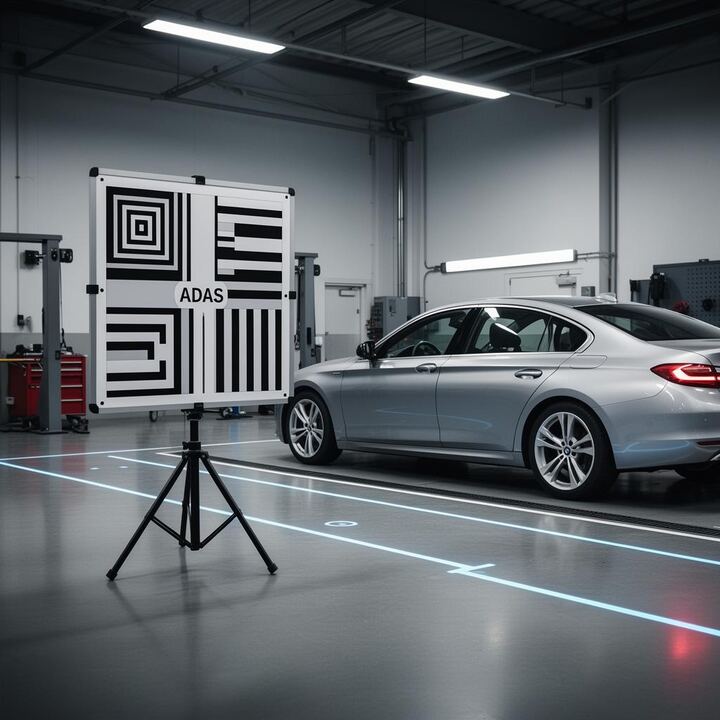
The repair file should contain the calibration trigger, governing OEM procedure, affected system and component, vehicle and workspace prerequisites, diagnostic records, calibration method, completion result, and any exception or failed condition. The packet should let a reviewer connect the collision operation to the required procedure without treating a scan report as proof of calibration.
No single document format is universal across all makes and systems. Focal ADAS therefore recommends a consistent evidence structure that can hold the procedure-specific output. The purpose is traceability for the shop's quality review, estimate support, supplement discussion, and final file, not a claim that every payer requests the same attachment.
What is the minimum decision trail for an ADAS calibration?
The file should answer five questions: What was affected? Which repair event triggered research? What did the current OEM procedure require? What operation was performed? What was the result? Those answers turn a generic sublet line into a traceable repair decision.
I-CAR explains that ADAS calibration information may appear in body repair or service manuals, may apply across several models, or may apply only to a specific model. It also notes that OEM summary documents usually identify the vehicles or systems covered. I-CAR's OEM ADAS document guidance supports preserving both the source and its application scope.
Focal ADAS recommends recording:
- VIN, year, make, model, and relevant configuration.
- Affected system, component, and component location.
- Repair, replacement, removal, installation, adjustment, alignment, or diagnostic event that prompted the research.
- Title or identifier of the governing OEM procedure and the date it was accessed.
- Required method, prerequisites, and separate verification steps.
- Completion status, result evidence, and any unresolved limitation.
That structure does not replace the OEM output. It gives the output a clear place in the repair narrative.
Why should scans and calibrations have separate records?
I-CAR defines scanning and calibration as different collision-repair operations. A scan identifies or clears diagnostic information, while calibration or initialization follows a procedure after many safety and convenience components are removed, installed, or repaired. I-CAR's scan and calibration definitions warn that confusing the terms can lead to the wrong work being requested.
The file should therefore retain pre-repair and post-repair diagnostic records separately from calibration results. A clean scan can show that no reportable diagnostic trouble codes remain at that moment. It does not show that a camera or radar completed its geometric or on-road calibration. Conversely, a calibration result does not replace diagnosis of unrelated or blocking faults.
A repair-order summary should label each operation accurately:
- Pre-repair diagnostic scan and findings.
- Diagnostic steps and corrective actions.
- Calibration, aiming, setup, initialization, or relearn as named by the OEM.
- Post-repair diagnostic scan and findings.
- Operation check or final test drive when separately required.
This separation helps an estimator support the exact work performed instead of presenting one ambiguous line.
Which setup details are worth keeping?
The setup record should follow the procedure. Depending on the application, relevant details can include tire pressure, vehicle load, fuel or fluid condition, ride height, alignment status, floor condition, lighting, target position, measured distances, and road conditions. Only items required or material to that procedure should be retained.
A 2025 Nissan bulletin hosted by NHTSA provides a strong measurement example. It repeatedly requires target distances and heights to be documented in assigned tables before those values are entered into the calibration process. The NHTSA-hosted camera calibration bulletin demonstrates that recorded setup values can be part of the prescribed operation, not optional notes.
The practical file does not need photographs of every routine action unless the procedure or shop process calls for them. It does need enough evidence to show that critical inputs were verified. A short setup sheet tied to the VIN is more useful than an unlabeled image that cannot be connected to a procedure or result.
What should a successful result record show?
The completion record should identify the vehicle, system, component, procedure, date, method, and final status. If the procedure generates a result screen, report, measurement set, or parameter review, that output should be attached or retained in the shop's normal file system. Any post-calibration scan or separate operation check should be labeled as its own result.
Primary OEM examples support that practice. A Nissan campaign bulletin tells technicians to verify before-and-after information, print the result screen, and attach it to the repair order for warranty documentation, with a saved capture as an alternative when immediate printing is unavailable. The NHTSA-hosted Nissan campaign bulletin is application-specific, but it shows an OEM explicitly connecting electronic output to the repair order.
That example should not be converted into a claim that every calibration must produce the same printout. Some procedures generate different evidence. The consistent requirement for Focal ADAS's recommended packet is that the file truthfully states what the applicable procedure produced and whether it completed.
How should diagnostic judgment appear in the repair order?
The repair order should show the symptom, relevant findings, procedure followed, corrective action, and final verification when diagnosis affects the calibration path. A 2026 GM bulletin hosted by NHTSA says many specified front-camera replacements resulted from incomplete diagnostics or non-camera causes. It directs the steps to be followed in order and the answers to be documented in the repair order. The NHTSA-hosted GM diagnostic bulletin provides a direct OEM example of that documentation discipline.
For the shop, a concise diagnostic narrative can prevent a failed calibration from being misread as automatic proof of a failed component. It can also show why programming, bracket correction, glass correction, power-system work, network diagnosis, or another prescribed action occurred before calibration was attempted again. Only actions actually supported by the vehicle procedure and findings belong in the record.
What should the file say when calibration does not complete?
An incomplete calibration should never be represented as successful. The file should state the attempted procedure, point of failure or non-completion, relevant conditions, diagnostic information, action taken, and recommended next step. If road, weather, workspace, vehicle preparation, or an unresolved fault prevented completion, that condition should be named plainly.
The next step might be additional diagnosis, correction of a prerequisite, a different workspace, a later road window, or referral through the appropriate OEM service path. The documentation should distinguish "not attempted," "attempted but incomplete," and "completed" because those statuses lead to different production decisions.
This recommendation follows I-CAR's central principle that the detailed operation list should include the actual OEM procedure needed. I-CAR's scan-versus-calibration guidance says specificity reduces confusion and improves the handoff.
What packet helps with estimate and supplement review?
Focal ADAS recommends sending a compact packet rather than a stack of unexplained screenshots. The packet can include the repair-order line, trigger statement, procedure reference, scan records, calibration result, setup evidence required by the procedure, exception note, and sublet invoice. The factual basis should be visible without claiming that any insurer is obligated to accept one format.
The pre-scan and post-scan service provides the diagnostic side of the file, while why a clean scan is not a calibration explains the distinction for internal reviewers. Shops choosing a documentation workflow can use the body-shop service page, and a specific job can begin through the estimate page.
Focal ADAS supports collision shops from Seattle to Tacoma. Documentation and scheduling questions can be sent to service@focaladas.com or discussed at (206) 460-0999.
Frequently asked questions
Is a clean post-repair scan enough documentation for ADAS calibration?
No. I-CAR defines scanning and calibration as different operations. The file should retain scan findings and calibration evidence separately so a reviewer can see which diagnostic and procedure-based work was actually completed.
Does every calibration need the same screenshot or printout?
No. Result formats vary by OEM procedure and system. The file should preserve the output the applicable procedure produces, identify the VIN and operation, and state the completion status without inventing a universal document format.
How should a failed or incomplete calibration be documented?
The record should state the procedure attempted, point of failure or non-completion, relevant conditions, diagnostic findings, corrective action, and next step. It should clearly distinguish not attempted, attempted but incomplete, and completed statuses.
Is there one insurer-required ADAS documentation packet?
No universal payer format is asserted. Focal ADAS recommends a compact packet containing the trigger, procedure reference, scan records, calibration result, required setup evidence, exception note, and sublet invoice so the factual basis is easy to review.
Which procedure information should appear in the repair file?
The file should identify the source procedure by title or identifier, note when it was accessed, state the vehicle and system scope, and connect it to the triggering repair event. That trail helps prevent a broad OEM summary from being applied to the wrong model or configuration.
Sources
- I-CAR OEM ADAS information documents guide https://rts.i-car.com/crn-1586.html
- I-CAR differences between scanning and calibration https://rts.i-car.com/crn-843.html
- NHTSA-hosted Nissan around-view camera calibration bulletin https://static.nhtsa.gov/odi/tsbs/2025/MC-11013278-0001.pdf
- NHTSA-hosted Nissan campaign repair-order documentation bulletin https://static.nhtsa.gov/odi/tsbs/2021/MC-10188324-0001.pdf
- NHTSA-hosted GM front-camera diagnostic bulletin https://static.nhtsa.gov/odi/tsbs/2026/MC-11033726-0001.pdf
Focal ADAS handles it on-site, same day, from Seattle to Tacoma.
Put calibration on autopilot.
Request a calibration in 60 seconds. A reply with an arrival window comes back within the hour.