GM ADAS calibration requirements after collision repair depend on the exact vehicle, affected component, and repair event. The estimator should use current GM service information to identify the system, component location, trigger, method, and prerequisites. Diagnostic scans, corrective work, calibration or relearn, and final verification should remain distinct in the repair file.
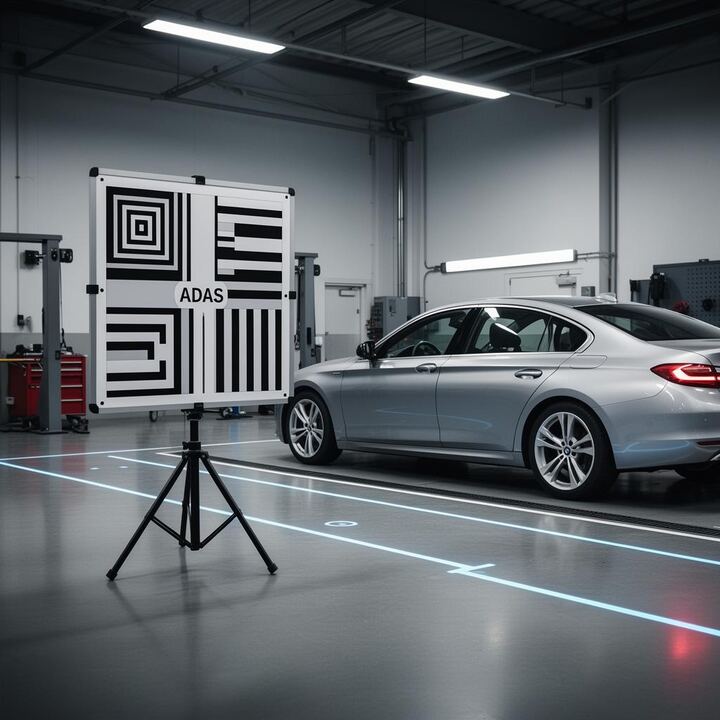
GM ADAS calibration requirements after collision repair come from the exact vehicle's service information, affected component, and repair event. The estimate should identify the system and component location, verify when calibration is required, complete the prescribed diagnostic sequence, and document the result. A scan result alone does not answer the calibration question.
GM gives repairers a structured way to research the work, but that structure does not turn every vehicle into the same procedure. Cameras, radars, surround-view components, and their mounting areas can carry different events and prerequisites. The repair order needs enough detail to connect the collision operation to the current OEM instruction.
Where should an estimator start the GM calibration search?
I-CAR identifies two GM service-information documents that organize driver-assistance research. The Driver Assistance Systems Configuration Reference includes tables for system description, component location, calibration events and comments, and factors that may lengthen a dynamic calibration. A companion considerations document addresses parts, sensor obstructions, and vehicle modifications. I-CAR's GM ADAS information guide directs repairers to GM's official service channel for those documents.
That structure suggests a practical blueprint order:
- Identify the vehicle configuration and installed system.
- Locate every affected camera, radar, sensor, and mounting area.
- Match each repair operation to the calibration table and vehicle procedure.
- Read the comments and prerequisites, including dynamic-calibration conditions.
- Add diagnostics, calibration, verification, and documentation as separate operations when required.
The estimator should still open the current vehicle procedure. I-CAR notes that ADAS information may apply across many models or only one specific model, and OEM summaries identify the vehicles or systems they cover. I-CAR's OEM ADAS document explanation is a warning against applying a convenient table outside its stated scope.
Which front-camera events have a published GM requirement?
I-CAR reported a GM forward-camera calibration requirement tied to windshield replacement or removal and installation, camera-bracket replacement or removal and installation, camera replacement, and direction from a service bulletin. The report says the requirement was placed in the vehicle-specific control-module reference. I-CAR's GM camera requirement notice provides the trigger list and points back to vehicle service information.
The list is useful during damage analysis because glass and bracket operations can matter even when the camera itself remains in the vehicle. It should be treated as a research trigger, then confirmed against the current procedure for the VIN. The estimate should name the glass, bracket, camera, or bulletin event that created the calibration line rather than entering an unsupported generic sublet.
Other GM systems require the same event-based discipline. A bumper operation may affect a radar field, attachment, or component without sharing the windshield-camera procedure. A surround-view camera can require a different setup and result. The configuration reference described by I-CAR exists so component location and calibration conditions can be reviewed separately.
Why should diagnosis come before camera replacement?
A 2026 GM bulletin hosted by NHTSA gives a direct example of diagnostic discipline. GM engineering analysis and field reviews identified many front-camera replacements associated with incomplete diagnostics or causes outside the camera itself. The bulletin lists vehicle-power concerns, network issues, windshield or bracket conditions, and software or calibration issues among possible causes, then requires the steps to be followed in order and the answers to be documented in the repair order. The NHTSA-hosted GM bulletin is the load-bearing source for that example.
That bulletin does not mean every GM camera concern has the same cause or sequence. It shows why a trouble code, warning, or failed calibration should not automatically become a parts decision. The repair plan should preserve the symptom, diagnostic findings, procedure followed, corrective action, relearn or calibration step, and final verification for the application covered.
This sequence protects cycle time as well as technical accuracy. An unsupported replacement can consume a production slot without resolving the condition, while an incomplete repair order can force the next technician to repeat discovery. The bulletin's instruction to document answers in the repair order creates a clear model for traceable diagnostic work.
Can a clean post-repair scan close the calibration line?
No. I-CAR defines scanning and calibration as different operations. A scan captures and evaluates diagnostic information, while calibration or initialization follows the relevant service procedure after many parts are removed, installed, or repaired. I-CAR's scan-versus-calibration definitions caution that calling a calibration "just a scan" can produce the wrong work and delay the repair.
For a GM repair file, the estimator should ask two independent questions:
- Were the required diagnostic scans completed and were the findings addressed?
- Were every required calibration, setup, relearn, and verification operation completed under the current procedure?
A clean scan can support the diagnostic record. It does not prove that a camera or radar was geometrically calibrated, and a successful calibration does not erase unrelated diagnostic work.
What makes GM dynamic calibration hard to promise by the clock?
GM's configuration reference includes a "Slow Calibration" table for factors that can increase dynamic-calibration time. I-CAR's description of that table confirms that the OEM recognizes conditions that can lengthen an on-road procedure. The exact factors and acceptance conditions must come from the applicable service information.
The schedule should therefore separate controllable shop readiness from variable road completion. The vehicle can be mechanically ready, fully assembled, correctly loaded, and free of blocking faults, yet an on-road procedure may still depend on conditions outside the bay. A responsible promise is a planned appointment and prompt status update, not a universal minute count.
When a static step, dynamic step, or both are required, the estimate should state the method and preserve any condition that prevented completion. That record gives production staff a reasoned next action instead of an unexplained open sublet.
What documentation should close a GM ADAS operation?
Focal ADAS recommends a result packet that identifies the VIN, system, component, trigger event, source procedure, prerequisites, diagnostic findings, calibration method, completion status, and any remaining limitation. The packet should distinguish a scan, programming step, relearn, calibration, and road verification rather than collapsing them into one line.
The recommendation aligns with two primary records. GM's 2026 bulletin explicitly requires answers to be documented in the repair order during its diagnostic sequence. The bulletin supports a traceable diagnostic narrative, while I-CAR's GM document guide supports recording the system, component location, trigger, and dynamic-calibration considerations.
For windshield-camera work, the forward camera calibration service is the relevant next step. Front-impact and bumper work can be screened through front radar calibration, and multi-camera repairs can be routed to 360 camera calibration. Shops can also review why a clean scan is not a calibration before finalizing the repair plan.
Focal ADAS supports collision shops along the Seattle to Tacoma corridor. A shop can send the VIN and repair scope to service@focaladas.com or call (206) 460-0999 for procedure-based scheduling.
Frequently asked questions
Does GM require forward-camera calibration after windshield work?
I-CAR reported GM requirements tied to windshield replacement or removal and installation, camera-bracket work, camera replacement, and service-bulletin direction. The estimator should confirm the current vehicle-specific control-module procedure before writing or scheduling the operation.
Can a clean GM post-repair scan prove that calibration is complete?
No. I-CAR defines scanning and calibration as different operations. A scan reports diagnostic information, while calibration or initialization follows the applicable service procedure and needs its own completion evidence.
Does a failed GM camera calibration mean the camera must be replaced?
Not by itself. A 2026 GM bulletin identifies incomplete diagnostics and several non-camera causes behind many specified camera replacements, then requires an ordered diagnostic sequence and repair-order documentation before replacement is authorized for those applications.
Why can GM dynamic calibration time vary?
I-CAR says GM's configuration reference contains a section devoted to factors that may lengthen dynamic calibration. The exact conditions belong to the current service information, so scheduling should include a status plan instead of a universal duration promise.
What GM calibration information belongs in the repair file?
The file should identify the VIN, system, component location, trigger event, source procedure, prerequisites, diagnostic findings, method, completion status, and unresolved limitation. Scan, programming, relearn, calibration, and road verification records should remain separately labeled.
Sources
- I-CAR GM ADAS Information Document guide https://rts.i-car.com/crn-1761.html
- I-CAR OEM ADAS information documents guide https://rts.i-car.com/crn-1586.html
- I-CAR GM forward-camera calibration requirement notice https://rts.i-car.com/crn-585.html
- NHTSA-hosted GM front-camera diagnostic bulletin https://static.nhtsa.gov/odi/tsbs/2026/MC-11033726-0001.pdf
- I-CAR differences between scanning and calibration https://rts.i-car.com/crn-843.html
Focal ADAS handles it on-site, same day, from Seattle to Tacoma.
Put calibration on autopilot.
Request a calibration in 60 seconds. A reply with an arrival window comes back within the hour.