Hyundai ADAS calibration requirements depend on the VIN, installed systems, and repair event. Windshield work, camera or radar removal and replacement, sensor-area collision damage, brackets, trouble codes, and some surrounding-part repairs can trigger calibration. Collision shops must also check whether a replacement component needs variant coding and complete Hyundai-required diagnostic scans.
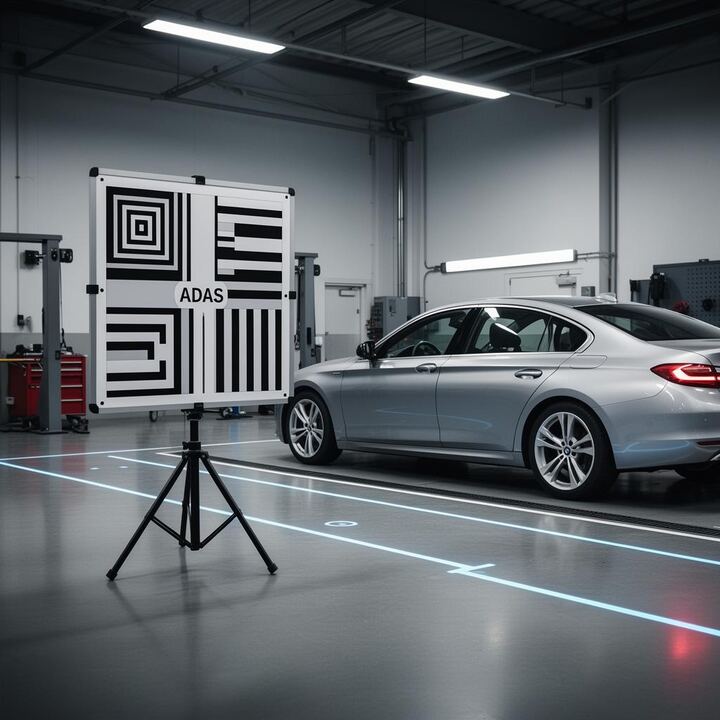
Hyundai ADAS calibration requirements depend on the exact vehicle, installed systems, and operation performed. A windshield, forward camera, front radar, rear-corner radar, surround-view camera, bracket, or nearby body repair can create a different requirement. The collision estimate should identify the affected component first, then match the repair event to current vehicle-specific service information.
That component-level approach matters because calibration is not the only electronic operation a Hyundai repair may need. A new camera or radar can also require variant coding, and the repaired vehicle still needs Hyundai's prescribed diagnostic checks. The repair file should keep calibration, coding, scanning, and functional verification separately labeled.
Which Hyundai repair events should enter the calibration plan?
The estimator should screen glass, bumper, camera, radar, bracket, and sensor-area work before the repair plan is locked. A specific 2023 Hyundai Santa Fe calibration record lists forward-camera calibration after camera removal, installation, or replacement; a deformed bracket; a related trouble code; and windshield removal, installation, or replacement. The same record lists front-radar calibration after sensor removal, installation, or replacement, related detection concerns, specified trouble codes, or collision impact to the sensor or surrounding parts.
The record also separates the rear corners from the front. Rear-corner radar calibration can follow a specified trouble code, sensor removal or replacement, bracket replacement, or a rear-bumper collision. Surround-view cameras have their own events. Those differences show why a generic line such as "Hyundai sensor calibration" does not give production or billing enough information.
A practical blueprint review should flag:
- Windshield removal, installation, replacement, or damage at the camera bracket.
- Camera, radar, controller, or mounting-part removal and replacement.
- Front or rear impact near a sensor or its support.
- Bumper, grille, mirror, liftgate, or other work named in the vehicle procedure.
- Diagnostic conditions or system behavior that direct calibration.
The 2023 Santa Fe record is an application example, not a make-wide trigger list. Every Hyundai still requires current VIN-specific service information.
Why does Hyundai windshield work need more than a glass line?
Hyundai's Non-OEM Glass position statement explains that driver-assistance functions using the windshield-mounted camera may not work properly with non-OEM glass and directs calibration of electronic systems after windshield replacement according to the Hyundai Shop Manual. The statement identifies functions such as forward-collision warning, lane-departure warning, lane-keeping assistance, and adaptive cruise control among the systems that can be affected.
A NHTSA-hosted Hyundai bulletin provides a model-range example. For identified 2018-2020 Elantra and 2019-2020 Santa Fe applications, the bulletin's forward-camera replacement procedure includes recalibration with a static target centered to the vehicle. That Hyundai camera bulletin also ties the camera to several driver-assistance functions, showing why the repair order should record the camera condition and calibration result rather than only the glass invoice.
The estimate should therefore include the glass specification, bracket inspection, camera handling, calibration procedure, diagnostic work, and result documentation called for by the application. The published model ranges should not be extended to later vehicles without current service information.
When does a Hyundai replacement component need variant coding?
Calibration establishes the component's required reference, while variant coding introduces certain replacement electronics to the vehicle configuration. I-CAR's Hyundai variant-coding guidance says the operation commonly appears with cameras and radar sensors and may be required by the service procedure or by a variant-coding trouble code. It also warns that a component may not function and may set faults when coding is omitted.
For estimating, that creates separate questions:
- Was the component replaced or only removed and installed?
- Does the service procedure call for coding?
- Does the same job also require calibration?
- What diagnostic and functional checks close the operation?
The Hyundai repair plan should not hide coding inside a calibration line. Each operation needs its own result because geometric completion alone does not establish that every replacement-configuration step was performed.
How can one damaged Hyundai input affect several systems?
Some Hyundai functions share cameras or sensors. I-CAR's driver parking assistance research explains that certain vehicles combine parking-assistance and rear-view functions, using rear-bumper ultrasonic sensors and a rear camera. Damage to, or calibration of, a shared input can therefore affect more than one displayed feature.
That design changes the estimator's questions after rear damage. The repair plan should identify all systems that use the affected input, not only the complaint named on the assignment. A rear camera, bumper sensor, connector, bracket, or related body part may need inspection, diagnostics, calibration, initialization, or an operation check under the exact procedure.
Shared inputs do not mean that every connected function needs the same operation. They mean the shop should trace the repaired component through the vehicle's system information and document each required outcome.
What scans and records should close a Hyundai ADAS repair?
Hyundai's current scan guidance reported by I-CAR requires a pre-repair scan for accurate repair planning and a post-repair scan to confirm systems are functioning, calibrated, communicating, and free of diagnostic trouble codes. It also says scanning is required even when no warning or malfunction lamp is illuminated.
Hyundai closeout should record the VIN, named system, sensor position, triggering repair, governing procedure, chosen method, applicable coding status, diagnostic findings, outcome, and any limitation. A clean scan should accompany required calibration evidence, not substitute for it.
For glass-centered work, the forward camera calibration service is the relevant next step. Front-impact jobs can be planned through front radar calibration, while multi-camera repairs can be screened through 360 camera calibration. The shop can also review windshield ADAS calibration before finalizing the estimate.
For scheduling, the shop should send the VIN and repair context to service@focaladas.com or call (206) 460-0999. Focal ADAS confirms the current OEM procedure, calibration method, and site requirements before the appointment.
Frequently asked questions
Does Hyundai require calibration after windshield replacement?
Hyundai directs repairers to calibrate applicable electronic systems after windshield replacement according to the vehicle Shop Manual. The estimator must verify the VIN-specific camera, glass, bracket, and calibration instructions rather than applying one procedure to every model.
Can a Hyundai camera or radar need both coding and calibration?
Yes. I-CAR reports that variant coding commonly appears with replacement Hyundai cameras and radar sensors, while the service procedure may also require calibration. Coding, calibration, diagnostic scans, and functional verification should remain separate repair-file operations.
Does rear-bumper damage trigger Hyundai radar calibration?
It can on applications whose procedure lists that event. The 2023 Santa Fe calibration record includes a rear-bumper collision among rear-corner radar triggers, but the exact model, sensor, bracket, and repair event must be confirmed for every VIN.
Is a warning light required before a Hyundai post-repair scan?
No. Hyundai guidance reported by I-CAR requires scanning regardless of whether a warning or malfunction indicator is illuminated. The post-repair scan also does not replace calibration evidence when the vehicle procedure requires calibration.
What should a shop send for Hyundai mobile calibration scheduling?
The handoff should include the VIN, complete repair order, affected glass or body operations, replaced electronics, bracket condition, alignment status, pre-repair scan, and unresolved faults. That information allows Focal ADAS to confirm the current procedure and site needs.
Sources
- Hyundai Non-OEM Glass position statement https://rts.i-car.com/images/pdf/oem-info/hyundai/position-statements/83334.pdf
- I-CAR OEM Calibration Requirements Search for 2023 Hyundai Santa Fe https://rts.i-car.com/calv-3959.html
- I-CAR Hyundai variant coding guidance https://rts.i-car.com/crn-1417.html
- I-CAR Hyundai driver parking assistance research https://rts.i-car.com/crn-1963.html
- I-CAR Hyundai pre-repair and post-repair scanning guidance https://rts.i-car.com/crn-2296.html
- NHTSA-hosted Hyundai front-camera calibration bulletin https://static.nhtsa.gov/odi/tsbs/2020/MC-10174793-0001.pdf
Focal ADAS handles it on-site, same day, from Seattle to Tacoma.
Put calibration on autopilot.
Request a calibration in 60 seconds. A reply with an arrival window comes back within the hour.