Mazda i-ACTIVSENSE calibration requirements depend on the VIN, component, and repair event. Windshield, camera, bumper, radar, mirror, door, bracket, and diagnostic work can produce different triggers. Some Mazdas use simultaneous front-radar aiming, some replacement blind-spot sensors must be handled in pairs, and some forward cameras allow dynamic aiming with a static fallback.
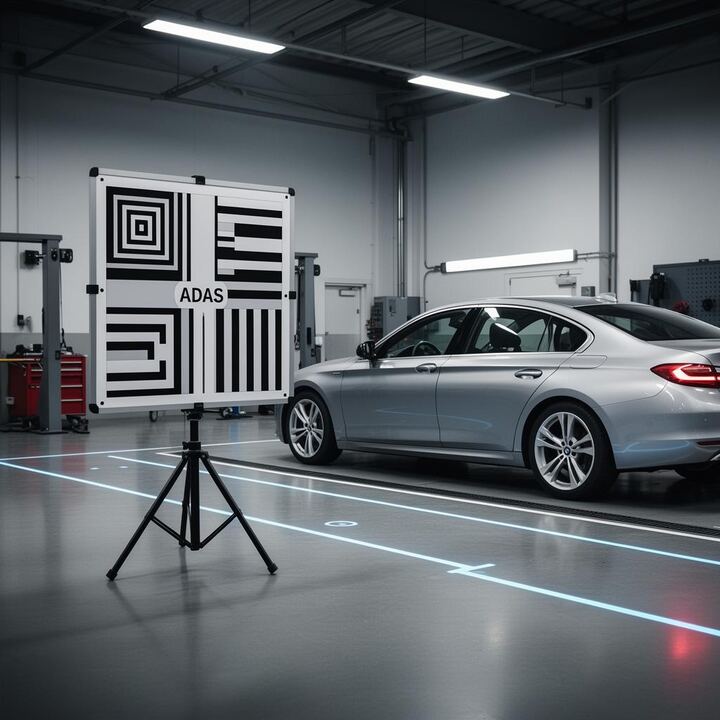
Mazda i-ACTIVSENSE calibration requirements depend on the VIN, installed component, and repair event. Windshield, forward-camera, bumper, radar, mirror, door, bracket, or diagnostic work can lead to different operations. Mazda is especially important to research by model because simultaneous radar aiming, paired blind-spot replacement, and camera method details do not apply across the entire make.
The estimator should use Mazda's system outline to map functions to their shared inputs, then open each component procedure. That process prevents a suite name from becoming an unsupported universal calibration line and helps production identify related repairs before the vehicle reaches the calibration stage.
How does Mazda organize i-ACTIVSENSE information?
I-CAR's Mazda i-ACTIVSENSE research cites the Mazda Workshop Manual definition of i-ACTIVSENSE as a collective term for safety and driver-support systems using radar, sonar, and camera detection. It says Mazda provides a vehicle-specific outline with system definitions, component locations, and a matrix showing which components support each function.
That outline is valuable for damage analysis because one component can support several functions. The estimator's research path should be:
- Enter the VIN and open the vehicle-specific i-ACTIVSENSE outline.
- Identify every affected camera, radar, sensor, controller, bracket, and attached body part.
- Open the removal, installation, aiming, configuration, and diagnostic procedures for those components.
- Separate required calibration, replacement, scanning, and operation checks on the estimate.
The outline helps locate the work. It does not replace the procedure or prove that a named system is installed on every Mazda.
Which Mazda body and glass operations can trigger camera calibration?
The 2024 Mazda CX-5 calibration record illustrates the breadth of camera triggers. It lists forward-sensing camera calibration after camera removal or replacement, a specified trouble code, or windshield removal or replacement. Its side-camera events include work on the camera or attached body part, specified diagnostic conditions, front-door removal or adjustment, and side-mirror trim or turn-light work.
The same record treats 360-view cameras differently from the basic rear-view camera. The front, side, and surround-view units have calibration events, while no calibration requirement was identified for the rear-view-only camera in that record. Front-radar aiming appears after specified diagnostic conditions, sensor replacement, or mounting-bracket replacement.
These are CX-5 application facts, not a blanket rule. They show why a mirror, door, or windshield operation can affect a camera even when the estimate contains no direct camera replacement.
When can Mazda calibrate several front radars together?
I-CAR's Mazda simultaneous front-radar research says some vehicles carry a center front radar plus two front-side radars and use one combined aiming procedure for all three. It gives the 2025 Mazda CX-30 as a specific example in which the three sensors can be aimed together during one drive according to the Workshop Manual.
That procedure is a make-specific scheduling advantage only when the VIN and service information confirm it. The estimator should not write three independent calibrations or assume one combined operation without opening the current procedure. The handoff should identify all three sensor locations, repair events, bracket conditions, and any fault that could block the combined sequence.
The 2024 Mazda CX-90 calibration record provides a related model example. It lists front-radar calibration after front bumper or grille removal or replacement, front-emblem work, sensor removal or replacement, or specified diagnostic conditions. Its separate front-side radar entries reinforce the need to determine whether the application uses independent or simultaneous aiming.
When can Mazda blind-spot sensor replacement involve both sides?
I-CAR's Mazda paired-sensor research documents a narrow 2021 Mazda CX-3 example. For specified right-side blind-spot controller part numbers, the Workshop Manual says the left-side controller must be replaced at the same time so configuration can be completed normally. I-CAR warns that not all Mazda vehicles require paired replacement.
The estimator should therefore check the exact part and procedure before ordering one or two units. If paired replacement applies, the repair plan must account for both components, configuration, any aiming procedure, scans, and functional verification. If it does not apply, copying the example would create unnecessary work.
This is one of the clearest reasons the Mazda page cannot be a swapped-name template. The quirk depends on model, side, and specified replacement electronics rather than the broad blind-spot function.
Can Mazda forward-camera aiming be dynamic or static?
A NHTSA-hosted Mazda service alert covers 2019-2022 Mazda3 and 2020-2022 CX-30 applications. It says dynamic forward-sensing camera aiming may fail when lane markings are covered or absent or when the road cannot provide a sufficiently straight path. It also defines dashboard indicators for completion and directs static aiming if dynamic aiming does not complete or the calibration message returns.
The alert gives the estimator an honest scheduling framework. Dynamic aiming depends on road visibility and geometry, while static aiming needs the specified indoor setup. The shop should not promise one method or a fixed finish time until the current vehicle procedure is confirmed and road conditions are evaluated.
The alert is limited to its stated models and years. It should not be used to claim that every Mazda offers both methods.
How can Mazda bumper damage change repairability?
I-CAR's current Mazda bumper-cover guidance cites a 2025 CX-90 instruction to replace the front bumper if the radar-emitting area needs repainting and replace the rear bumper when the area around the blind-spot controller is damaged. It also reports warnings about water, mud, contamination, stickers, putty repairs, and scratches in the sensor area.
Those are vehicle-specific restrictions with direct estimate consequences. The shop should identify the radar field before approving plastic repair or refinishing, then document why repair or replacement was selected. Calibration cannot correct an obstructed or disallowed bumper repair.
Mazda also recommends scans before and after collision repair according to its position statement reported by I-CAR. The final packet should separately identify the VIN, component, trigger, repairability decision, aiming method, configuration status, scan findings, result, and limitation.
Relevant next pages include forward camera calibration, front radar calibration, and blind spot radar calibration. Estimators can also review bumper replacement and radar calibration.
For scheduling, the shop should send the VIN and repair context to service@focaladas.com or call (206) 460-0999. Focal ADAS confirms the current OEM procedure, calibration method, and site requirements before the appointment.
Frequently asked questions
Does every Mazda use the same i-ACTIVSENSE calibration procedure?
No. Mazda system content and calibration events vary by model, year, component, and repair. The vehicle-specific i-ACTIVSENSE outline helps identify the systems and shared inputs, but each component procedure controls the required operation.
Can Mazda front radars be calibrated together?
Some can. I-CAR documents a 2025 CX-30 example with a combined driving procedure for the center and two front-side radars. The VIN-specific Workshop Manual must confirm whether simultaneous or separate aiming applies.
Must both Mazda blind-spot sensors always be replaced together?
No. I-CAR documents paired replacement only for specified right-side controllers in a 2021 CX-3 example and warns that the requirement is not universal. The estimator should verify model, side, part, and procedure before ordering.
Can weather or road markings prevent Mazda dynamic camera aiming?
Yes, for the specified Mazda3 and CX-30 applications in a NHTSA-hosted service alert. Covered or missing lane markings and an insufficiently straight road can prevent completion, after which the alert directs static aiming under its stated conditions.
Can a Mazda bumper radar area be repaired and repainted?
The answer is vehicle specific. Mazda guidance reported by I-CAR gives a 2025 CX-90 example requiring front-bumper replacement when the radar-emitting area needs repainting and rear-bumper replacement when the blind-spot controller area is damaged.
What should a shop send before Mazda mobile calibration?
The handoff should include the VIN, i-ACTIVSENSE components, camera and radar locations, glass and bumper operations, door or mirror work, sensor part details, bracket status, diagnostic findings, and road-readiness information. Focal ADAS then confirms the current method and setup.
Sources
- I-CAR Mazda i-ACTIVSENSE outline research https://rts.i-car.com/crn-1333.html
- I-CAR OEM Calibration Requirements Search for 2024 Mazda CX-5 https://rts.i-car.com/calv-4598.html
- I-CAR OEM Calibration Requirements Search for 2024 Mazda CX-90 https://rts.i-car.com/calv-4596.html
- I-CAR Mazda simultaneous front-radar calibration research https://rts.i-car.com/crn-2259.html
- I-CAR Mazda blind-spot sensor replacement research https://rts.i-car.com/crn-1920.html
- NHTSA-hosted Mazda forward-sensing camera service alert https://static.nhtsa.gov/odi/tsbs/2022/MC-10215253-0001.pdf
- I-CAR Mazda bumper-cover repair guidance for ADAS https://rts.i-car.com/crn-2369.html
- I-CAR Mazda pre-repair and post-repair scanning guidance https://rts.i-car.com/crn-796.html
Focal ADAS handles it on-site, same day, from Seattle to Tacoma.
Put calibration on autopilot.
Request a calibration in 60 seconds. A reply with an arrival window comes back within the hour.