Usually yes. A modern bumper cover is a structural housing for radar and ultrasonic sensors that adaptive cruise, forward collision braking, blind spot monitoring, and parking aids all depend on. Removing the cover almost always disturbs those sensors, even when no fault code is stored, so the manufacturer requires calibration based on the operation, not the scan result.
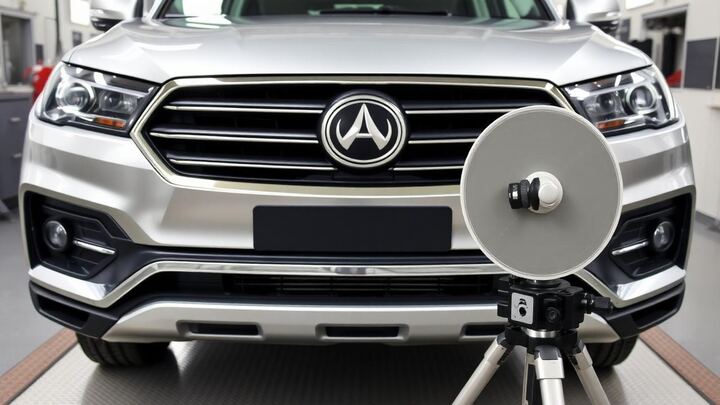
What lives behind a modern bumper
Front and rear bumper covers hold more safety hardware than any other body panel. Behind a front cover you will typically find the radar for adaptive cruise and forward collision warning, ultrasonic parking sensors, and on many vehicles a surround-view camera. Behind a rear cover sit the corner radars that run blind spot monitoring and rear cross-traffic alert, the rear ultrasonic sensors, and the backup or surround camera. Each of those is aimed to a specification, and each moves when the cover comes off. I-CAR publishes calibration guidance for exactly these sensors: forward radar (crn-461), blind spot (crn-466), and park assist (crn-474).
Why a clean scan is not enough
This is the most common misconception on the estimating side. A radar that has shifted a degree or two inside its bracket still reports itself as healthy, because it has no way to know the bumper around it moved. The fault only shows up later, when adaptive cruise follows the wrong vehicle or forward collision braking reacts late. I-CAR states the distinction directly: clearing codes is not calibrating, and the modules "do not know they were replaced or that any calibration is required" (I-CAR RTS). That is why OEM procedures call for calibration based on the operation performed, not the scan.
What the manufacturers require
The manufacturers put this in writing. Stellantis requires that after bumper and fascia repair, "calibrations or initializations outlined within the service information for the blind spot monitoring system must be performed prior to returning the vehicle to the customer" (FCA US, Bumper/Fascia Repair With ADAS, via I-CAR RTS). Volvo states that "vehicles equipped with ADAS may require calibration after a bumper cover has been removed or replaced" (Volvo, via I-CAR RTS). The requirement is confirmed against the procedure for the specific VIN, which Focal ADAS does on every job.
How to scope it on the estimate
Treat the calibration as part of the bumper operation, not a decision to make after the paint is dry. This is a material line: AAA found the rear ultrasonic sensor work on a representative rear-bumper repair averaged about $685, roughly 41 percent of that repair's cost (AAA, 2023). Estimating it up front means the appointment is scheduled and the vehicle delivers on time instead of waiting a day for calibration to be sourced.
Frequently asked questions
Does bumper or sensor replacement always trigger a calibration?
When the operation removes or disturbs a radar, an ultrasonic sensor, or a camera in the bumper, yes. A refinish that removes and reinstalls the cover usually disturbs the sensors too. The procedure for the VIN confirms the exact requirement.
If only one rear corner was hit, do both blind spot sensors need calibration?
Usually yes. The procedure calibrates the pair so the warning zones meet at the correct overlap. Calibrating one side alone can leave a coverage gap.
Will a post-scan tell me the radar is aimed correctly?
No. A clean post-scan only means no fault is stored. Aim is confirmed by completing the calibration procedure and capturing the pass result.
Sources
- I-CAR RTS, "Typical Calibration Requirements For Forward Radar Sensors." https://rts.i-car.com/crn-461.html
- I-CAR RTS, "Typical Calibration Requirements For Blind Spot Sensors." https://rts.i-car.com/crn-466.html
- I-CAR RTS, "Typical Calibration Requirements For Park Assist Sensors." https://rts.i-car.com/crn-474.html
- I-CAR RTS, "The Differences Between Scanning and Calibration." https://rts.i-car.com/crn-843.html
- FCA US LLC, "Bumper/Fascia Repair With ADAS Technology," via I-CAR RTS https://rts.i-car.com/images/pdf/oem-info/chrysler/position-statements/83311.pdf
- Volvo, "Bumper Cover Repair With ADAS," via I-CAR RTS https://rts.i-car.com/crn-826.html
- AAA, "Fixing Advanced Vehicle Systems Makes Up Over One-Third of Repair Costs Following a Crash," 2023 https://newsroom.aaa.com/2023/12/fixing-advanced-vehicle-systems-makes-up-over-one-third-of-repair-costs-following-a-crash/
Focal ADAS handles it on-site, same day, from Seattle to Tacoma.
Keep reading
Put calibration on autopilot.
Request a calibration in 60 seconds. A reply with an arrival window comes back within the hour.