Mercedes-Benz ADAS calibration requirements are vehicle-configuration specific and must be verified through the current VIN-based service and diagnostic workflow. Windshield replacement can require multifunction-camera calibration, while bumper paint thickness, filler restrictions, radar mounting position, and separate non-ADAS initializations can change the repair plan.
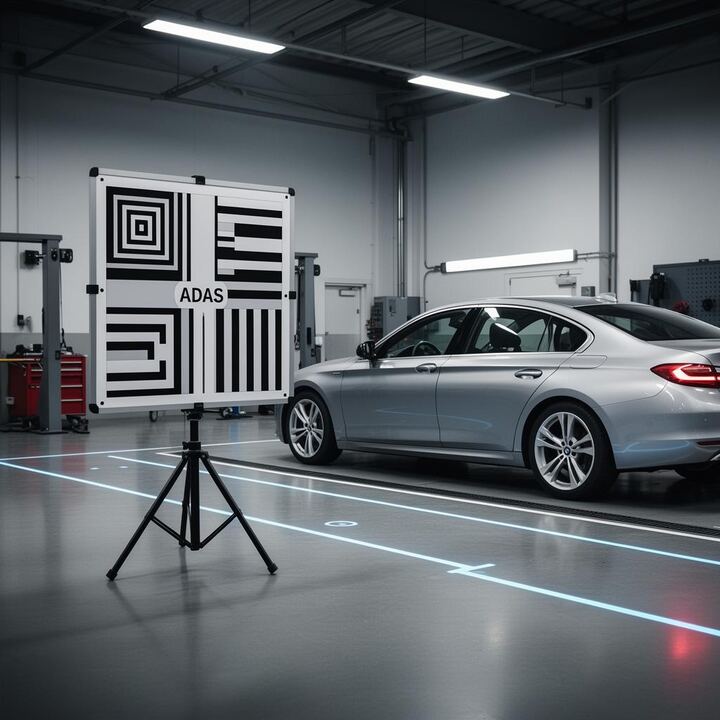
Mercedes-Benz ADAS calibration is a configuration-specific repair operation, not a standard step that can be inferred from the badge. The estimator needs the VIN, installed option content, affected component, and current repair information before deciding whether the job calls for calibration, a mounting check, diagnosis, programming, or another operation. Modern systems can combine cameras, radar units, ultrasonic inputs, steering data, and chassis references, but each vehicle's procedure remains controlling.
The practical starting point is the OEM diagnostic workflow. I-CAR reports that Mercedes-Benz vehicle configuration and calibration requirements are identified through the make's diagnostic environment, where the connected vehicle and installed systems determine the applicable instruction. I-CAR CRN-2378 is the exact source for that workflow. A model-family assumption or a generic list cannot replace it.
How does a shop find the correct Mercedes-Benz calibration requirement?
The repair planner should connect the VIN, affected part, and actual repair event to current service information. The first visible procedure may not answer every ADAS question, so linked electrical, glass, bumper, camera, radar, and diagnostic instructions should be reviewed. The diagnostic environment can then identify configuration-dependent steps for the installed equipment.
That sequence is especially important when the estimate is written before disassembly. A camera may be listed as part of a mirror-area assembly, radar may sit behind a refinished bumper zone, and an initialization may belong to a non-ADAS system. The estimate should avoid collapsing all of those possibilities into a single line called sensor reset.
I-CAR separately identifies several Mercedes-Benz post-repair initializations that are not ADAS calibrations, including certain steering, window, sunroof, seat, and occupant-related operations. I-CAR CRN-632 supports that distinction. Correct labeling prevents a completed window or steering initialization from being mistaken for camera or radar aiming.
When does windshield work affect the forward camera?
For 2016 through 2024 Mercedes-Benz vehicles covered by I-CAR's glass research, the multifunction camera at the rearview-mirror area requires calibration after windshield replacement. The same article says a head-up display should be checked and calibrated if necessary after windshield work on equipped vehicles. I-CAR CRN-487 provides the model-year range and named operations.
That range is useful for planning, but the shop should still retrieve the instruction for the specific VIN. The current procedure establishes glass requirements, camera installation checks, vehicle preparation, calibration method, and completion criteria. A camera that communicates without a warning lamp has not thereby proven correct aim.
The blueprint should also account for the camera bracket and viewing area. Glass installation, adhesive position, trim, camera seating, or bracket damage can prevent a procedure from completing or can make the physical reference unreliable. A mobile appointment is most efficient after the glass is final, the camera area is clean, related faults are addressed, and any required chassis work is complete.
What limits apply around bumper-mounted radar?
Mercedes-Benz repair information imposes constraints on radar sensing areas. I-CAR states that front and rear bumper repairs must observe specified paint thickness, that body filler is not permitted in the sensor area, and that two coats are permitted at short-range radar locations for the covered guidance. I-CAR CRN-1123 is the specific source.
Those limits affect both repairability and calibration planning. An estimator should identify the radar location before authorizing plastic repair or refinishing. The file should distinguish among sensor removal, bracket or mounting damage, bumper substrate repair, paint build, and the calibration or function procedure. A completed calibration cannot validate a bumper repair that exceeds an OEM material restriction.
Another Mercedes-Benz repair article describes a radar damping test after certain bumper painting operations for specified option codes. It directs the repairer to the current make-specific paint and diagnostic procedures rather than a universal paint formula. I-CAR CRN-2092 documents that added verification path. The shop should apply it only when the identified vehicle information calls for it.
Can mounting position create a radar fault after collision repair?
Yes. A Mercedes-Benz bulletin for a limited Model 907 application links a front-radar concern to damage or incorrect installation position and directs inspection of the component, its vertical values, and mounting height. NHTSA document MC-10228812-0001 contains the exact bulletin.
The bulletin is not a make-wide trigger list. It is a useful example of why the shop should inspect more than the sensor face. A radar unit may need a correct bracket angle, height, or installation position before any calibration procedure can succeed. Replacement without correcting the mounting reference can preserve the underlying problem.
The repair plan should therefore connect impact direction and structural work to the sensor's support. When the mount, bracket, carrier, bumper reinforcement, or nearby structure is repaired, the estimator should review the applicable dimensional and installation instructions before scheduling calibration.
What should be complete before the calibration appointment?
Mercedes-Benz readiness begins with vehicle configuration, then splits by sensing path. A windshield job needs final glass, mirror-area camera installation, and any equipped display-related glass check. A bumper job needs its permitted coating build, filler decision, radar mount, surrounding structure, and height condition resolved. Geometry, tire state, vehicle load, electrical support, and relevant faults must satisfy the selected workflow. The work area or drive route is chosen only after that workflow is known.
The dispatch note should name the configured system, the collision operation that triggered research, the affected glass or radar zone, and every mounting or refinishing decision. It should also show alignment status, diagnostic findings, and the instruction used. Focal ADAS can then classify the request as ready, blocked by repair, or still requiring procedure confirmation.
How should a Mercedes-Benz radar job pass the release gate?
A Mercedes-Benz bumper-and-radar job should pass three independent checks before it is released for aiming.
- The sensing path must be repairable under the vehicle information. Paint thickness, filler, repair layers, color-related instructions, and any required radar-damping check belong to the exterior repair decision. I-CAR's bumper guidance and radar-optimized-color resource show that the finish itself can be a controlled input.
- The radar and its mounting references must be physically correct. A unit installed at the wrong height or angle should not be treated as a calibration-only concern. The NHTSA-hosted Model 907 bulletin is narrow in application, but it demonstrates the diagnostic distinction between a mounting-position problem and an aiming operation.
- The configured vehicle must call for the operation being scheduled. Mercedes-Benz calibration information can be exposed through the diagnostic workflow after the vehicle is identified. I-CAR CRN-2378 is the source for that procedure architecture, not a universal list of triggers.
The estimate can mirror those checks with separate lines for the permitted bumper work, any mounting correction, the configuration-specific calibration, and the resulting documentation. If a radar-damping test is required, it should not be disguised as calibration. If the mount is damaged, the corrective repair should not be buried inside an aiming line. If the calibration workflow identifies an unmet prerequisite, the status should be recorded as blocked rather than completed.
That release gate gives production a practical stop point. The vehicle does not advance merely because the bumper looks finished or the sensor communicates. It advances when the sensing path, mounting condition, and vehicle-specific electronic procedure agree.
What should the shop receive after the work?
The returned record should name the VIN, system, procedure, method, preparation state, result, and any limitation. If the vehicle is not ready or the operation does not complete, the status should say so plainly. A diagnostic scan, a configuration operation, a radar damping check, and a calibration result should remain separate records because they answer different repair questions.
Related planning resources include windshield calibration requirements, bumper replacement and radar calibration, forward-camera calibration, front-radar calibration, and blind-spot calibration.
For a make-specific calibration request, a shop can send the VIN and repair details to service@focaladas.com or call (206) 460-0999. Focal ADAS confirms the applicable procedure, vehicle readiness, and scheduling before the visit.
Frequently asked questions
Does Mercedes-Benz use one calibration rule for every model?
No. The vehicle configuration and current diagnostic workflow determine the applicable system and procedure. A model-family assumption cannot establish the installed options, trigger, method, or completion criteria.
What happens after a Mercedes-Benz windshield replacement?
For the 2016 through 2024 vehicles covered by I-CAR research, the multifunction camera requires calibration after windshield replacement. Equipped vehicles can also require a head-up-display check and calibration if necessary.
Can body filler be used in a Mercedes-Benz radar area?
The cited Mercedes-Benz bumper guidance says body filler is not permitted in the covered sensor area and applies paint-thickness limits. The VIN-specific bumper procedure should be checked before repair or refinishing.
Is radar calibration enough when the mounting position is wrong?
No. A radar unit needs the mounting position required by the current procedure before aiming can provide a valid reference. Collision damage, bracket condition, installation height, and nearby structure may need correction first.
What documentation should return after Mercedes-Benz calibration?
The record should identify the VIN, named system, repair trigger, current procedure, method, prerequisites, result, and any limitation. Scans, configuration, radar damping checks, calibration, and other initializations should remain separately labeled.
Sources
- I-CAR, Mercedes-Benz Vehicles On The RTS OEM Calibration Requirements Search, CRN-2378 https://rts.i-car.com/crn-2378.html
- I-CAR, Mercedes-Benz Glass Replacement Requirements, CRN-487 https://rts.i-car.com/crn-487.html
- I-CAR, Bumper Cover Repair With ADAS: Mercedes-Benz, CRN-1123 https://rts.i-car.com/crn-1123.html
- I-CAR, OEM ADAS Radar Optimized Color Resources: Mercedes-Benz, CRN-2092 https://rts.i-car.com/crn-2092.html
- I-CAR, Additional Calibration Requirements: Mercedes-Benz, CRN-632 https://rts.i-car.com/crn-632.html
- Mercedes-Benz front-radar installation bulletin, NHTSA document MC-10228812-0001 https://static.nhtsa.gov/odi/tsbs/2022/MC-10228812-0001.pdf
Focal ADAS handles it on-site, same day, from Seattle to Tacoma.
Put calibration on autopilot.
Request a calibration in 60 seconds. A reply with an arrival window comes back within the hour.