Mitsubishi ADAS calibration requirements depend on the installed sensor configuration and repair event. Some vehicles use a forward camera without front radar, while others use both. Windshield conditions, bumper sensing-zone restrictions, rear-radar procedures, camera settings, and non-ADAS initializations must be identified separately for the VIN.
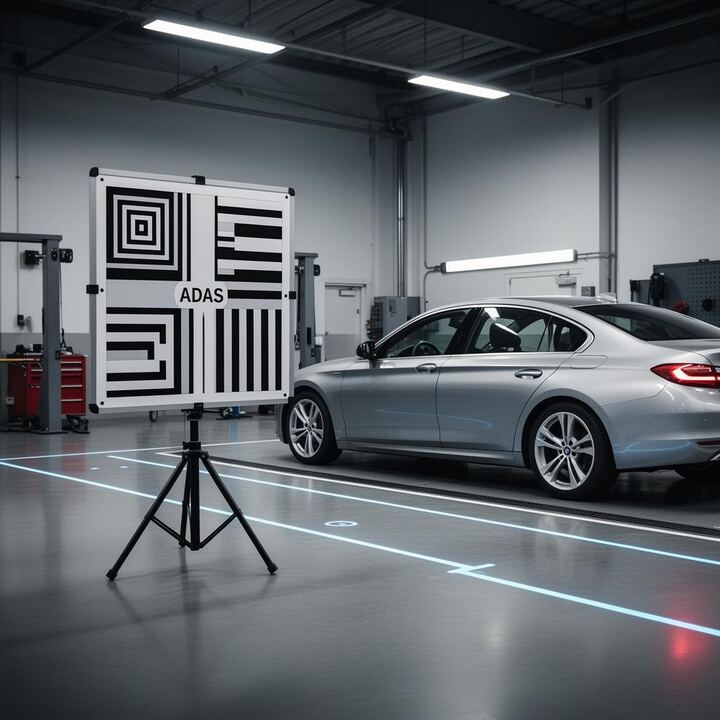
Mitsubishi ADAS calibration requirements depend on the vehicle configuration, affected component, and actual repair event. Some vehicles use a forward camera without front radar, while others use both. Rear corner radar, a parking camera, and ultrasonic sensors can also require different kinds of setup or verification. The estimator should identify the installed hardware and retrieve the current procedure before naming the operation.
I-CAR's Mitsubishi research specifically distinguishes camera-only applications from vehicles that also use a front radar unit behind the bumper. I-CAR CRN-1459 is the source for that configuration difference. A single make-wide line for camera and radar calibration can therefore include work that is not installed or omit work that is.
How does a shop identify the installed Mitsubishi ADAS hardware?
The VIN-specific service information should control the identification. The estimator can use the model year, trim information, scan results, visual component location, and repair procedure to confirm whether the vehicle has a forward camera, front radar, rear corner radar, surround-view cameras, ultrasonic sensors, or another relevant input.
I-CAR reports that certain Mitsubishi vehicles use only a forward camera for some driver-assistance functions, while other applications combine the camera with radar behind the front bumper. I-CAR CRN-1459 supports that difference. The repair plan should not infer the sensor set from a consumer feature name alone.
Once the hardware is identified, the shop should trace the actual repair event. Camera replacement, windshield work, radar removal, bumper modification, bracket damage, and body-mount changes may lead to different procedures. The estimate should name the component and event rather than use a generic recalibrate safety system line.
When can forward-camera aiming fail after glass work?
A Mitsubishi technical bulletin for 2022 through 2024 Outlander vehicles discusses front-camera calibration errors and identifies several contributing conditions. It includes inaccurate vehicle or setup measurements, ambient lighting, a non-OEM windshield, and problems with the required visual setup or background. NHTSA document MC-10252695-0001 contains the exact bulletin.
That bulletin is limited to its stated Outlander range and should not be treated as a universal Mitsubishi procedure. It does provide a strong readiness lesson: glass selection, camera installation, measurement accuracy, lighting, and the surrounding work area can determine whether a calibration completes. A mobile visit should be scheduled only after those conditions are checked against the current vehicle instruction.
The repair record should distinguish a procedure that could not start from one that started and failed. If the windshield, bracket, setup measurement, lighting, or another prerequisite is the blocker, the returned note should identify it so production can correct the cause instead of simply repeating the same attempt.
What restrictions apply in a Mitsubishi radar sensing area?
Mitsubishi radar guidance limits what can be placed or repaired in the transmission area. I-CAR reports that stickers, paint, and putty should not be applied in the named radar penetration area and that the component should be protected from impact, scratching, and other damage. The article also describes symmetric rear sensing areas for the applicable rear systems. I-CAR CRN-1460 is the specific source.
These restrictions belong in blueprinting before bumper repair or refinishing. The shop should map the sensing area, decide whether the part remains repairable, inspect the radar and mount, and then research any calibration or operation check. A later calibration result cannot prove that paint, filler, or an attachment in the transmission area complies with the repair information.
The estimate should separate the exterior repair from radar removal and installation, calibration, and any function or angle check. Those operations have different evidence and may not all be required on the same vehicle.
Is rear-camera setting the same as ADAS calibration?
No. I-CAR explains that Mitsubishi calls one rear-camera operation a setting that aligns the parking guide lines. It is not described as a calibration, is not required for every vehicle, and is not necessarily listed merely because the camera was removed and installed. I-CAR CRN-1458 supports that distinction.
This naming issue matters to estimating. A parking-guide-line setting should not be presented as radar aiming or forward-camera calibration. Likewise, a rear-camera operation does not prove that surround-view cameras or rear corner radar are ready. The repair file should use the terminology in the current procedure and preserve the outcome for the named component.
An I-CAR 2019 Outlander Sport example illustrates the component-level differences. It lists front-camera calibration after camera replacement, rear blind-spot sensor calibration after bumper modification or sensor removal, installation, or replacement, and separate operation or angle checks. The same record does not identify a rear-camera calibration requirement. I-CAR calibration verification record CALV-3654 is the exact limited example.
Which Mitsubishi initializations should remain separate?
Mitsubishi service information includes non-ADAS initialization work. I-CAR lists examples involving steering angle, the battery-current sensor, stability-related learning, and transmission functions. I-CAR CRN-679 provides that make-specific list.
Those operations can be important to the repair sequence without being camera or radar calibration. An estimator should label them separately and follow the current instruction for each. Completing a steering-related learn does not automatically close a forward-camera requirement, and a successful camera calibration does not replace required chassis initialization.
What should be ready before a mobile calibration visit?
The vehicle should have the final windshield, bumper, trim, cameras, radar units, brackets, and mounts installed. Any required alignment, ride-height, tire, loading, and diagnostic work should be complete. The camera view and radar transmission areas should be clean and within the OEM repair limits.
Mitsubishi readiness starts with the configuration card. Camera-only and camera-plus-radar vehicles should not arrive under the same assumed scope. Glass work must meet the stated measurement, lighting, viewing-background, and windshield conditions. Bumper work must preserve the radar transmission area addressed by the applicable instruction. Rear-camera guide-line setting, rear-radar work, and surround-view work remain separately identified.
The request packet should pair the VIN and model year with the installed component map, repair event, altered parts, geometry status, scan findings, and source procedure. The provider can then determine the specific physical setup or driving conditions without turning them into a Mitsubishi-wide default.
What should a Mitsubishi configuration card contain?
A concise configuration card can prevent Mitsubishi work from being estimated by feature name alone. It should travel with the repair from blueprint through closeout and contain six fields.
- The VIN and model year establish the vehicle being researched.
- The installed forward arrangement identifies camera-only or camera-plus-radar configuration. I-CAR's radar-sensor research tip is useful because it shows that both arrangements exist.
- The rear arrangement identifies corner radar, a rear camera with guide-line setting, surround-view cameras, and ultrasonic devices separately. A parking display does not prove that every listed component uses calibration.
- The repair event names the changed glass, fascia, sensor, bracket, mounting area, alignment, or electronic component.
- The procedure column separates aiming, a camera setting, angle checking, an operation check, initialization, coding, and scanning.
- The completion field records a pass, blocker, failed attempt, or not-required determination with the source procedure.
The 2019 Outlander Sport verification record demonstrates why those labels matter. It reports distinct findings for the forward camera, rear blind-spot sensors, operation checks, angle checks, and rear camera. The record is limited to that reviewed vehicle, but its component-by-component method is a useful blueprinting model.
The card is also valuable after windshield replacement. For the covered 2022 through 2024 Outlander vehicles, the NHTSA-hosted bulletin lists measurement, lighting, glass, and visual-background conditions that can interfere with the stated calibration. Recording those prerequisites before the appointment turns a vague failure into a specific readiness issue.
At the bumper, the card should identify the radar transmission area and protect it from the paint, putty, sticker, impact, and scratch conditions addressed by I-CAR CRN-1460. The finish decision should be resolved before the radar operation is requested. That ordering keeps an electronic pass from being mistaken for approval of an out-of-scope material repair.
What should the calibration record show?
The returned documentation should identify the vehicle, component, trigger, procedure, method, prerequisites, and result. It should separately label camera setting, radar calibration, operation checks, scanning, coding, and any non-ADAS initialization. A blocked or incomplete operation should state the cause and next required step.
Related shop resources include static versus dynamic calibration, windshield-related calibration research, forward-camera calibration, front-radar calibration, and surround-view camera calibration.
For a make-specific calibration request, a shop can send the VIN and repair details to service@focaladas.com or call (206) 460-0999. Focal ADAS confirms the applicable procedure, vehicle readiness, and scheduling before the visit.
Frequently asked questions
Does every Mitsubishi with a forward camera also have front radar?
No. I-CAR identifies camera-only Mitsubishi applications and others that combine the camera with front radar. The VIN and current service information should identify the installed configuration before estimating.
What can block Mitsubishi forward-camera calibration after glass work?
A bulletin for specified 2022 through 2024 Outlander vehicles lists measurement accuracy, ambient lighting, non-OEM glass, and visual setup or background issues. The exact vehicle procedure remains controlling.
Can paint or putty be used in a Mitsubishi radar area?
The cited Mitsubishi guidance excludes stickers, paint, and putty from the specified radar transmission area. The estimator should map the sensing zone and resolve repairability before calibration is scheduled.
Is a Mitsubishi rear-camera setting a radar calibration?
No. Mitsubishi uses a separate setting for parking guide lines on applicable rear-camera systems. It should not be labeled as forward-camera aiming, rear-radar calibration, or a universal camera requirement.
What should the Mitsubishi closeout record identify?
The record should name the vehicle, component, trigger, current procedure, method, prerequisites, and result. Camera settings, radar calibration, operation checks, scans, coding, and non-ADAS initializations should remain separate.
Sources
- I-CAR, Calibration Research Tips: Mitsubishi Radar Sensor, CRN-1459 https://rts.i-car.com/crn-1459.html
- I-CAR, Calibration Research Tips: Mitsubishi Rear View Camera Setting, CRN-1458 https://rts.i-car.com/crn-1458.html
- I-CAR, Bumper Cover Repair With ADAS: Mitsubishi, CRN-1460 https://rts.i-car.com/crn-1460.html
- I-CAR, Additional Calibration Requirements: Mitsubishi, CRN-679 https://rts.i-car.com/crn-679.html
- Mitsubishi Outlander front-camera calibration bulletin, NHTSA document MC-10252695-0001 https://static.nhtsa.gov/odi/tsbs/2024/MC-10252695-0001.pdf
- I-CAR, Calibration Verification: 2019 Mitsubishi Outlander Sport, CALV-3654 https://rts.i-car.com/calv-3654.html
Focal ADAS handles it on-site, same day, from Seattle to Tacoma.
Put calibration on autopilot.
Request a calibration in 60 seconds. A reply with an arrival window comes back within the hour.