Static calibration is performed with the vehicle stationary in a controlled work area, while dynamic calibration requires an OEM-directed drive under specified conditions. Some vehicles require both in sequence. Shops should schedule the bay, vehicle preparation, road access, staffing, and final test drive around the exact procedure rather than promise one universal completion time.
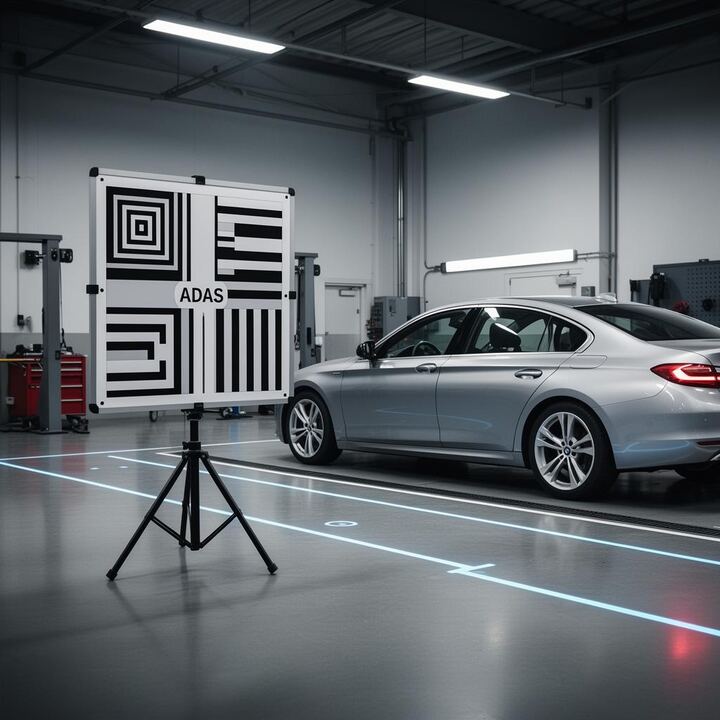
Static calibration is performed with the vehicle stationary in a controlled work area, while dynamic calibration is completed by driving the vehicle under the conditions stated by the OEM procedure. Some vehicles require one method, and some require a static step followed by a dynamic step. The difference directly affects bay planning, road access, staffing, and delivery timing.
For a collision shop, the useful question is not which method sounds faster. It is which sequence the current vehicle procedure requires and whether the vehicle, workspace, road route, and production schedule are ready for that sequence. A method should never be chosen only to fit an available bay or promised delivery hour.
What happens during a static calibration?
I-CAR defines static calibration as calibration of cameras or sensors while the vehicle remains stationary. The procedure can require calibrated references, precise positioning, diagnostic interaction, and other specified setup items. I-CAR's static-calibration guidance explains that the required items and process come from the OEM procedure.
The production impact begins before the calibration starts. I-CAR says some OEMs require a specified distance of flat, open space around the vehicle and a clean, clear floor. It also notes that repair-manual steps can include tire pressure, vehicle load, and fuel level, and that precise measurement and setup may involve more steps than expected. The same I-CAR guidance makes workspace and vehicle preparation part of the operation.
A static appointment therefore needs:
- The required floor footprint reserved for the full setup, not merely a parking stall.
- A reasonably level, clean, unobstructed surface that meets the procedure.
- Adequate lighting without conditions that interfere with the camera or reference.
- The vehicle prepared to the stated tire, load, ride-height, fuel, fluid, and alignment conditions.
- All geometry-changing and field-of-view repairs completed before setup begins.
Those requirements explain why a vehicle can be "assembled" yet still not be calibration-ready.
What makes a dynamic calibration different from a test drive?
A dynamic calibration is an OEM-directed process performed while the vehicle is driven. I-CAR states that it can require two technicians and diagnostic monitoring, and that it is not the same operation as a normal post-repair test drive. I-CAR's dynamic-calibration comparison says the final test drive should follow required calibrations as a separate step.
Dynamic procedures can specify vehicle speed, road conditions, visible lane markings, time of day, traffic context, or other route characteristics. Weather and objects near the roadway may also affect completion. I-CAR notes that one system may need a straight open road while another may call for a different setting, depending on the manufacturer and system. The road-condition guidance is why "take it around the block" is not a complete scheduling plan.
For production, suitable road access means more than a driveway. The selected route has to support the conditions in the current procedure and allow safe operation. If those conditions are unavailable, the file should show that the dynamic step was attempted or deferred, why it could not finish, and what the next action is.
Can one vehicle require both static and dynamic calibration?
Yes. I-CAR reports that many ADAS procedures call for a dynamic process or a static process followed by a dynamic process. I-CAR's calibration-method overview establishes that the methods are not mutually exclusive.
An NHTSA-hosted OEM technical bulletin provides a concrete two-stage example. It directs an initial stationary calibration followed by an on-road calibration route with defined road and driving conditions, then requires the resulting parameters to be reviewed for final approval. The NHTSA-hosted calibration bulletin demonstrates why a shop cannot assume that completion of the bay step completes the entire procedure.
When both methods are required, the estimate and schedule should show the sequence:
- Confirm mechanical and body readiness.
- Prepare the vehicle and controlled work area.
- Complete the stationary procedure and record its status.
- Complete the specified on-road procedure under acceptable conditions.
- Perform any separate post-repair test drive or operation check.
- Attach the results and exceptions to the repair file.
Collapsing that sequence into one undifferentiated labor line makes a partial completion difficult to identify.
Which method takes longer for cycle-time planning?
There is no honest universal answer. Static work can be delayed by bay clearance, floor condition, vehicle preparation, measurement, or a failed prerequisite. Dynamic work can be delayed by traffic, weather, road markings, route availability, or a condition that prevents the required drive from completing. Some vehicles require both.
I-CAR's general review confirms that calibrations vary by OEM and can be static in the shop or dynamic on the road. I-CAR's typical-requirements article also notes that cameras and sensors can be positioned on all sides of a vehicle, so the repair plan must identify the affected system rather than assign time by vehicle category.
The best cycle-time forecast is procedure-based. It should include a reserved arrival window, verified prerequisites, the required method or sequence, and a status point if conditions prevent completion. The shop can then separate a preventable readiness delay from an uncontrollable road-condition delay.
What should the estimator write before scheduling either method?
The estimate should name the affected system, component, trigger event, source procedure, required method, prerequisite operations, and final verification. If the OEM calls for both methods, both should be visible. If a final test drive is separate, it should not be represented as the dynamic calibration itself.
Focal ADAS recommends a handoff containing:
- VIN and complete repair scope.
- Repaired, replaced, removed, installed, or adjusted components.
- Completion status for glass, body, refinish, suspension, alignment, and tire work.
- Diagnostic findings that could block calibration.
- Available bay dimensions and floor condition for static work.
- Safe route access for dynamic work.
- Requested delivery timing and the shop contact responsible for status decisions.
The recommendation follows the central source rule: read and follow the exact OEM procedure. I-CAR's static guidance says service information should be checked each time because procedures can change.
How should a shop choose the appointment window?
The vehicle should be booked only after work that can affect sensor location, vehicle geometry, or field of view is final. Static work needs protected bay time, while dynamic work needs a realistic route window. A combined procedure needs both resources in sequence.
The static and dynamic recalibration service explains how Focal ADAS routes method-specific work. Camera-centered repairs can be paired with forward camera calibration, while the broader ADAS calibration definition can help staff explain the operation internally. Shops selecting a sublet process can also review how to vet an ADAS calibration partner.
Focal ADAS coordinates mobile work for collision shops between Seattle and Tacoma. Procedure and scheduling questions can be sent to service@focaladas.com or discussed at (206) 460-0999.
Frequently asked questions
Is static or dynamic ADAS calibration better for a collision shop?
Neither method is a shop preference when the OEM procedure specifies the required process. Static work needs a controlled stationary setup, dynamic work needs an acceptable route, and some vehicles require both methods in a defined sequence.
Is dynamic calibration the same as a post-repair test drive?
No. I-CAR says dynamic calibration follows specified operating and road conditions and can require two technicians and diagnostic monitoring. A separate final test drive may still be required after all static and dynamic calibration steps are complete.
Can one ADAS procedure require both static and dynamic calibration?
Yes. I-CAR identifies procedures that use a static process followed by a dynamic process, and an NHTSA-hosted OEM bulletin provides a concrete two-stage example. The estimate should show both operations rather than treating the first successful step as completion.
Can weather or road markings delay dynamic calibration?
Yes, when the procedure depends on conditions such as clear lane markings, suitable weather, traffic context, road type, or speed. The repair file should state the blocking condition and next action if the prescribed route cannot be completed.
What should production reserve for a static calibration appointment?
Production should reserve the full procedure-defined footprint, a clean and suitably level floor, stable lighting, and enough uninterrupted time for vehicle preparation and measurement. The bay should remain protected from nearby vehicles, carts, and traffic during setup and calibration.
Sources
- I-CAR considerations for static calibration https://rts.i-car.com/crn-1800.html
- I-CAR dynamic calibrations compared with a test drive https://rts.i-car.com/crn-1056.html
- I-CAR typical calibration requirements https://rts.i-car.com/crn-689.html
- NHTSA-hosted OEM two-stage ADAS calibration technical bulletin https://static.nhtsa.gov/odi/tsbs/2019/MC-10162578-9999.pdf
Focal ADAS handles it on-site, same day, from Seattle to Tacoma.
Put calibration on autopilot.
Request a calibration in 60 seconds. A reply with an arrival window comes back within the hour.