Nissan and INFINITI ADAS calibration requirements depend on the VIN-specific system and repair event, not the suite name alone. Current OEM positions require the proper procedure after an ADAS component is removed or replaced and even after alignment. The shop should document the affected component, governing service instruction, calibration result, diagnostics, and any separate action test.
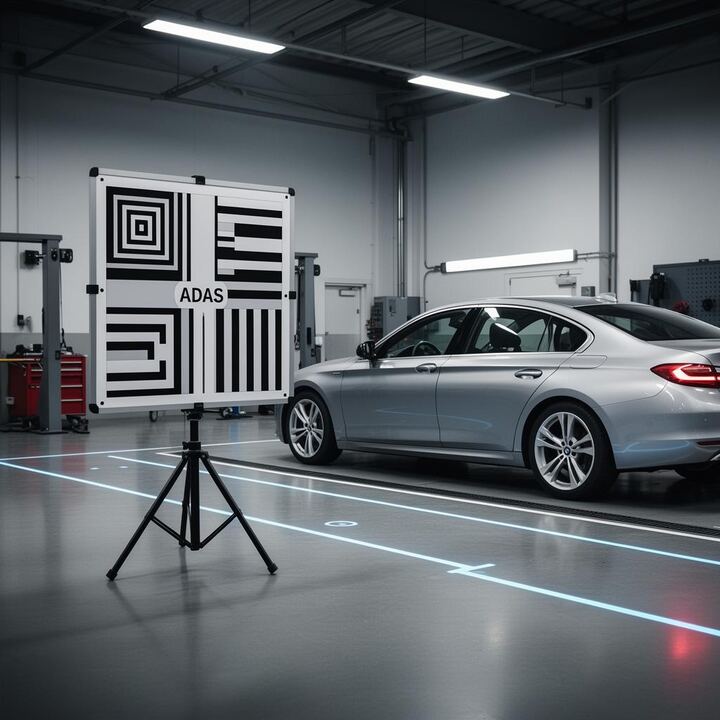
Nissan and INFINITI calibration requirements are determined by the exact vehicle, installed driver-assistance systems, and repair event. A suite name alone does not settle the estimate. The shop needs the VIN-specific service procedure, a complete record of what was removed or changed, and separate planning for calibration, diagnostics, and any required operation check.
That distinction matters during blueprinting. A forward camera, radar sensor, side camera, mounting bracket, windshield, alignment, or body part in a sensor field can lead to different instructions. Nissan's current collision position says proper calibration is required after an ADAS component is removed or replaced and even after vehicle alignment, with the Electronic Service Manual controlling the procedure. Nissan's 2026 position statement is explicit about those events.
Which Nissan or INFINITI repair events should enter the calibration plan?
The repair plan should start with the operations, not with a dashboard light. Nissan's position statement identifies component removal, component replacement, and vehicle alignment as calibration events. The parallel INFINITI position statement uses the same event-based direction and tells repairers to review model-specific service information before repair or replacement.
For an estimator, the first-pass review should flag:
- Removal or replacement of a camera, radar, sensor, or related ADAS component.
- Removal, replacement, repair, or adjustment of a mounting point or bracket.
- Glass, bumper, mirror, grille, suspension, or alignment work that appears in the applicable procedure.
- A diagnostic or service instruction that calls for calibration, initialization, or a separate operation check.
The list is a screening method, not a substitute for the electronic service manual. Nissan and INFINITI requirements can vary by year, model, system, and repair event. I-CAR's research notes that unusual calibration events occur even within one make, which is why the final decision belongs to the exact vehicle procedure. I-CAR's Nissan and INFINITI action-test guidance reinforces that model-level research is necessary.
Does the ProPILOT name identify one calibration procedure?
No. ProPILOT identifies a driver-assistance suite, while the installed cameras and sensors still have their own procedures and trigger conditions. The estimator should identify the affected component and system before assigning the labor operation. A suite label on a build sheet does not prove which calibration method, preparation steps, or verification sequence applies.
A 2025 Nissan service bulletin supplies a useful concrete example without creating a universal rule. For the identified Rogue application with an intelligent around-view system and ProPILOT Assist 2.1, replacement of any front, side, or rear around-view camera, or replacement of the system control module, requires camera calibration. The NHTSA-hosted Nissan bulletin also directs the technician back to the electronic service manual for the governing procedure.
That example is valuable because it shows why a repair order needs component-level detail. "Camera calibration" is too broad when several cameras can be involved. The estimate should identify which unit was affected, what operation affected it, and which procedure applies to that configuration.
What vehicle preparation belongs on the repair plan?
Preparation requirements are part of the operation, not incidental setup. I-CAR's vehicle-specific research includes a Nissan radar-alignment example that calls for specified tire pressure, an unloaded vehicle, a full fuel tank, correct fluid levels, and a four-wheel alignment before the radar procedure. Those facts come from a particular application and should not be copied to every Nissan. They show why the current procedure must be read before the vehicle reaches the calibration stage. I-CAR's pre-repair calibration review explains the application-specific prerequisites.
The NHTSA-hosted around-view bulletin provides another application-specific example. Its workspace instructions call for a large obstruction-free area, a floor that is as level as possible, and a clean, dry surface. It also requires numerous target-position measurements to be recorded before the values are entered into the calibration process. The bulletin's documented setup sequence demonstrates that setup and measurement can be material parts of the billed operation.
Production should therefore confirm the following before releasing the vehicle for calibration:
- Required structural, glass, suspension, alignment, and refinish work is complete.
- Tire condition, tire pressure, ride height, vehicle load, fluids, and fuel meet the applicable instructions.
- Sensor windows and camera views are clean and unobstructed.
- The assigned bay provides the footprint and floor condition stated by the procedure.
- The repair order identifies every affected ADAS component and related operation.
Are Nissan or INFINITI action tests the same as calibration?
No. I-CAR reports that some Nissan and INFINITI repairs or sensor removals require action tests to verify system operation. It also states that those tests are not calibrations and do not replace calibration or diagnosis. I-CAR's action-test explanation places the tests after any applicable calibration or diagnostic work.
This creates three separate estimating questions: Was a diagnostic scan required? Was a calibration required? Was an action test or other operation check required? Treating the terms as interchangeable can leave a required step off the repair plan. Each performed operation should have its own supporting record so the final file shows what was actually completed.
How should an estimator document the calibration decision?
Focal ADAS recommends a compact decision trail that another reviewer can follow without reconstructing the repair. The file should identify the VIN, affected system, component location, triggering repair operation, governing procedure, calibration method, prerequisite work, and result. If the procedure says calibration is not required but an action test is required, the file should preserve that distinction.
The around-view bulletin repeatedly instructs the technician to document individual length and height measurements in assigned tables before entering them. That NHTSA record supports keeping setup evidence with the result rather than retaining only a final status line. Documentation should match the actual procedure, since not every system produces the same output.
When should the mobile calibration appointment be scheduled?
The appointment should be placed after all work that can change sensor position, vehicle geometry, glass location, or the field of view is finished. The shop should send the VIN, repair order, affected components, completed operations, and any unresolved diagnostic information before arrival. That handoff lets Focal ADAS verify the procedure and the needed workspace before the vehicle occupies a production slot.
For work centered on the windshield camera, the forward camera calibration service is the relevant next page. Jobs involving the front bumper or cruise sensor can be routed to front radar calibration, while multi-camera work belongs with 360 camera calibration. General trigger questions can be checked against the repair-trigger overview before the make-specific procedure is researched.
Focal ADAS serves collision shops from Seattle to Tacoma. Scheduling information can be requested at (206) 460-0999 or service@focaladas.com after the shop has the VIN and repair scope ready.
Frequently asked questions
Does every Nissan or INFINITI vehicle with ProPILOT need calibration after a collision?
No. The suite name alone does not establish the required operation. The estimator must match the installed components and actual repair events to the VIN-specific electronic service procedure, then document the resulting calibration or operation-check decision.
Does a wheel alignment trigger Nissan or INFINITI ADAS calibration?
The 2026 Nissan and INFINITI position statements direct proper calibration after ADAS component removal or replacement and even after vehicle alignment. The exact components, preparation, and sequence still come from the applicable model-specific service information.
Can a Nissan action test replace an ADAS calibration?
No. I-CAR states that Nissan and INFINITI action tests verify operation but are not calibrations and do not replace calibration or diagnosis. A repair plan may need separate lines and records for all three operations.
What should a shop send before scheduling Nissan or INFINITI calibration?
The handoff should include the VIN, repair order, affected component locations, completed repair operations, alignment and glass status, and unresolved diagnostic findings. That information allows the current procedure and workspace prerequisites to be confirmed before dispatch.
Does around-view camera calibration need more bay space?
It can. A 2025 Nissan bulletin for a specified around-view application calls for a large obstruction-free area, a level and clean floor, multiple measured positions, and repositioning for individual cameras. Other vehicles must be checked against their own procedures rather than copied from that example.
Sources
- Nissan 2026 Advanced Driver Assistance System Components position statement https://rts.i-car.com/images/pdf/oem-info/nissan/position-statements/82767.pdf
- INFINITI 2026 Advanced Driver Assistance System Components position statement https://www.oem1stop.com/sites/default/files/Infiniti_Pos_ADAS_IPSB-26-730%281-1-26%29.pdf
- I-CAR Nissan and INFINITI action-test calibration research https://rts.i-car.com/crn-1337.html
- NHTSA-hosted Nissan around-view camera calibration bulletin https://static.nhtsa.gov/odi/tsbs/2025/MC-11013278-0001.pdf
- I-CAR OEM pre-repair calibration requirements https://rts.i-car.com/crn-1529.html
Focal ADAS handles it on-site, same day, from Seattle to Tacoma.
Put calibration on autopilot.
Request a calibration in 60 seconds. A reply with an arrival window comes back within the hour.