Stellantis ADAS calibration requirements for Jeep, Ram, Dodge, and Chrysler depend on the vehicle, installed systems, and complete chain of service procedures. Camera, radar, windshield, fascia, alignment, and module work may require calibration, while replacement electronics can also require a separate PROXI alignment. Scanning and functional validation remain additional closeout steps.
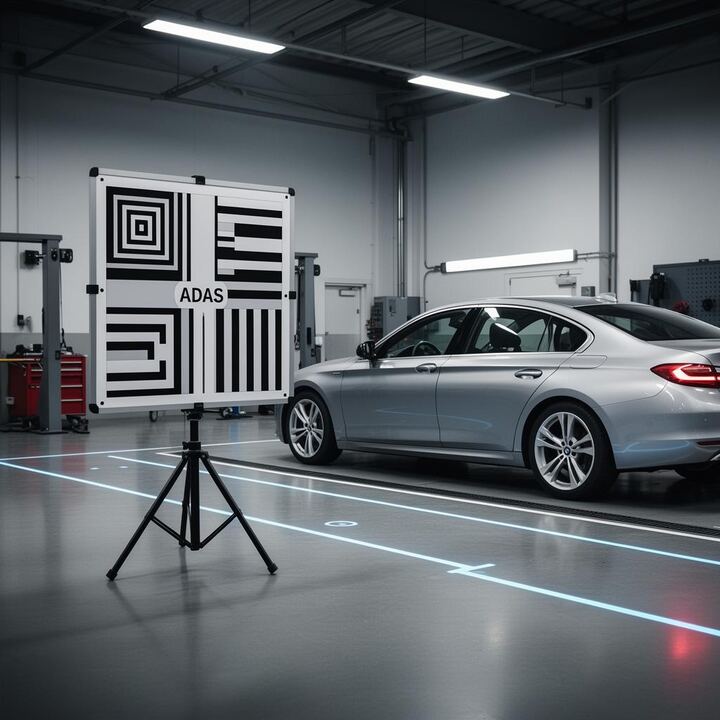
Stellantis ADAS calibration requirements for Jeep, Ram, Dodge, and Chrysler depend on the exact vehicle, installed system, and full chain of service procedures. A windshield procedure may send the technician to a camera procedure, while a module replacement may add configuration and more than one calibration method. The estimate needs that complete sequence before scheduling.
The Stellantis page is deliberately organized around information flow because that is a make-specific repair-planning risk. The governing operation may not be stated in the first removal or installation procedure the estimator opens. Camera calibration, radar calibration, module configuration, scanning, fascia restrictions, and final function checks should be researched as separate operations.
Why can the first Stellantis procedure miss the calibration step?
I-CAR's Stellantis ADAS repair-planning article shows how linked service information changes the blueprint. On a 2020 Chrysler Pacifica, the windshield procedure directs removal of the forward-facing camera but does not itself state the calibration requirement. The linked camera procedure supplies that requirement when the camera or windshield is removed or replaced.
The same article gives a 2022 Jeep Grand Cherokee example in which the windshield installation instruction tells the technician to follow the camera calibration procedure after installing the camera to its bracket. I-CAR's conclusion is that repairers may need to consult multiple service-manual sections and follow linked operations to find every initialization or calibration.
For estimators, the search path should include:
- The body, glass, or component removal and installation procedure.
- The procedure for every attached camera, radar, sensor, or controller.
- Programming, configuration, and calibration sections for replacement electronics.
- Diagnostic and post-repair validation requirements.
That search should start from the VIN and current service information. The two published vehicle examples explain the workflow but do not create a universal trigger list.
Is Stellantis PROXI alignment the same as calibration?
No. I-CAR's Stellantis PROXI alignment guidance defines PROXI alignment as a programming process that allows modules or electronic control units to communicate with the vehicle. It says omission can cause diagnostic trouble codes and system failures, and it explicitly distinguishes the operation from calibration.
The service manual decides when PROXI alignment is required. I-CAR uses a 2016 Chrysler 200 blind-spot sensor replacement as an example because each side sensor contains its own controller and a new unit may need the vehicle's configuration data aligned. That example is useful for writing separate estimate lines:
- Replacement and installation.
- Required configuration or PROXI alignment.
- Required calibration under the applicable component procedure.
- Diagnostic and functional verification.
A completed PROXI routine does not prove sensor aim, and a calibration result does not prove that a new controller was configured. Both records belong in the final repair file when the procedure requires both.
When can one central Stellantis module create mixed calibration work?
A NHTSA-hosted Stellantis central ADAS module case record supplies a specific module-replacement example. It states that replacement of the central ADAS decision module requires PROXI configuration, a static in-bay long-range radar calibration, and a dynamic forward-camera alignment. The same record describes that module as a central operating component for lane-centering functions and identifies radar, camera, ride-height, and suspension information among its inputs.
That source is a scoped technical case record, not a rule for every Jeep, Ram, Dodge, or Chrysler. It demonstrates why the repair order must name the module and list each resulting procedure. A generic "ADAS setup" line would hide two calibration methods plus a configuration operation and would leave production unsure which conditions must be ready.
The shop should confirm whether the current procedure calls for static work, dynamic work, or a combination. When a road procedure is required, the schedule should also reserve time for the defined road conditions and an honest status update if those conditions prevent completion.
How can Stellantis fascia repair affect blind-spot and parking systems?
The direct FCA US bumper and fascia position statement says repair or misalignment near blind-spot monitoring can cause improper driver-assistance operation. It requires the service-information calibrations or initializations, a post-repair scan, and functional validation before return to the customer.
The statement also sets concrete repair limits. It says substrate repair and filler must stay at least 25 cm, approximately 10 inches, from the sensor mounting area; park sensors and their attachment brackets should not be repaired; and total coating thickness must not exceed 12 mils or three topcoat finishes. Those limits should be checked before a bumper repair is authorized, since an incompatible repair decision can force replacement or rework before calibration.
For the estimator, the rear-corner review should capture prior coating, sensor-field location, bracket condition, substrate damage, filler limits, scan needs, calibration or initialization, and validation. Those facts belong in the repair plan before refinishing begins.
What model examples show different Stellantis component triggers?
The 2020 Chrysler Pacifica calibration record separates the vehicle's components. It lists surround-view camera calibration after camera removal or replacement, central vision module replacement, or specified diagnostic conditions. Its forward-camera events include camera removal from the bracket, camera removal or replacement, behavior concerns, trouble-code direction, and windshield removal or replacement.
For that same application, front-radar events include front-end work requiring sensor removal, front structural repair, rear-axle adjustment, sensor removal or replacement, and specified diagnostic conditions. The record also notes that radar generation changes the procedure and requirements. These are Pacifica examples, not a group-wide checklist, but they show why Jeep, Ram, Dodge, and Chrysler cannot share one assumed method.
Which scans and records close a Stellantis repair?
Stellantis scanning guidance reported by I-CAR requires testing safety and driver-assistance systems for stored or active faults before and after collision repair. It notes that even minor collisions, disassembly, trim work, and glass removal can introduce diagnostic trouble codes.
The completed file should identify the VIN, brand and model, component, trigger event, linked source procedures, configuration status, calibration method, fascia or geometry prerequisites, scan findings, and functional result. A scan, PROXI alignment, static calibration, and dynamic calibration should never be collapsed into one ambiguous line.
Relevant service pages include forward camera calibration, front radar calibration, and blind spot radar calibration. Shops planning fascia work can also review bumper replacement and radar calibration.
For scheduling, the shop should send the VIN and repair context to service@focaladas.com or call (206) 460-0999. Focal ADAS confirms the current OEM procedure, calibration method, and site requirements before the appointment.
Frequently asked questions
Does a Stellantis windshield procedure always state camera calibration?
Not necessarily. I-CAR documented a 2020 Chrysler Pacifica example where the windshield procedure led to a separate camera procedure containing the calibration requirement. The estimator should follow every linked operation in current VIN-specific service information.
Is PROXI alignment a Stellantis ADAS calibration?
No. I-CAR defines PROXI alignment as a programming process that establishes module communication and configuration, not sensor calibration. A repair can require PROXI alignment, calibration, diagnostic scans, and a functional check as distinct operations.
Can a central Stellantis ADAS module require static and dynamic work?
Yes, in a specific NHTSA-hosted Stellantis case record. That module-replacement sequence calls for PROXI configuration, static long-range radar calibration, and dynamic forward-camera alignment, but other vehicles must be checked against their own procedures.
Can a Jeep, Ram, Dodge, or Chrysler fascia be repaired near a radar sensor?
The FCA US position statement sets sensor-area limits, including no substrate repair or filler within 25 cm of the mounting area and no repair of parking sensors or their brackets. The current vehicle body and service information still controls the exact repair.
What should a shop send before Stellantis mobile calibration?
The shop should send the VIN, brand and model, full repair order, all linked procedures found, component and bracket status, fascia repair details, alignment work, replacement-module information, and scan findings. That context prevents configuration or calibration steps from being missed.
Sources
- I-CAR FCA and Stellantis ADAS repair-planning guidance https://rts.i-car.com/crn-1350.html
- I-CAR FCA and Stellantis PROXI alignment guidance https://rts.i-car.com/crn-1291.html
- FCA US bumper and fascia repair with ADAS position statement https://rts.i-car.com/images/pdf/oem-info/chrysler/position-statements/83311.pdf
- NHTSA-hosted Stellantis central ADAS module case record https://static.nhtsa.gov/odi/tsbs/2022/MC-10214573-9999.pdf
- I-CAR FCA and Stellantis pre-repair and post-repair scanning guidance https://rts.i-car.com/crn-405.html
- I-CAR OEM Calibration Requirements Search for 2020 Chrysler Pacifica https://rts.i-car.com/calv-4633.html
Focal ADAS handles it on-site, same day, from Seattle to Tacoma.
Put calibration on autopilot.
Request a calibration in 60 seconds. A reply with an arrival window comes back within the hour.