Volkswagen ADAS calibration requirements are vehicle and event specific. Windshield or camera work, radar removal, lock-carrier service, rear-toe adjustment, ride-height change, wheel alignment, software work, and repairs to camera mounting parts can trigger different procedures. Collision shops should research the dedicated Driver Assistance Systems manual and document scans separately from calibration.
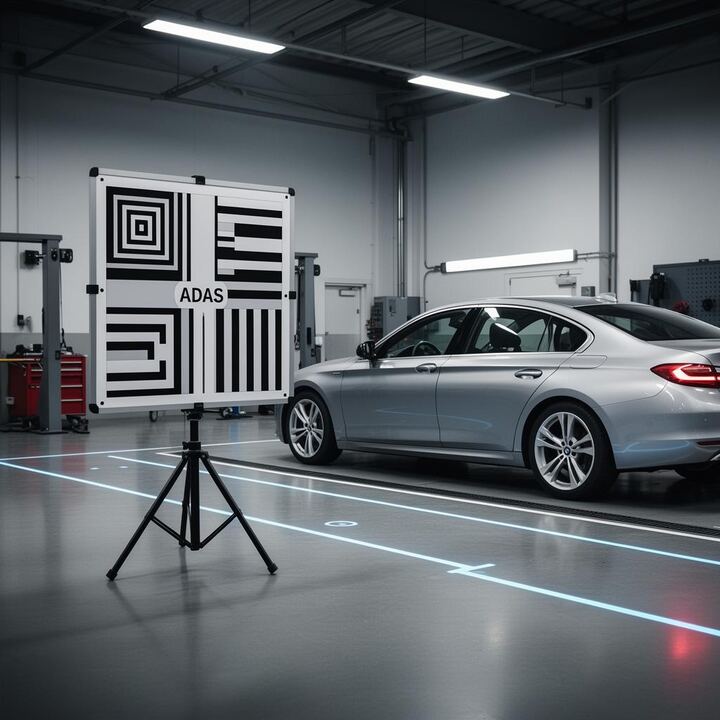
Volkswagen ADAS calibration requirements are determined by the VIN, fitted component, and repair event. Windshield work, camera removal, front-radar work, lock-carrier service, rear-toe adjustment, ride-height changes, wheel alignment, software operations, and repairs to camera mounting areas can produce different instructions. The estimate should identify each component before method or scheduling is promised.
Volkswagen's make-specific planning distinction is the strong connection between driver-assistance calibration and vehicle geometry. A forward camera or radar can require action after suspension or rear-toe work even when the collision damage is elsewhere. Multi-camera systems can also react to body-part, ride-height, and control-module changes.
Where does Volkswagen organize its ADAS procedures?
I-CAR's Volkswagen repair-manual guidance says that, starting with 2019, Volkswagen added a dedicated Driver Assistance Systems manual for many models. The manual includes component locations, system descriptions, removal and installation procedures, calibration requirements and procedures, required resources, and safety precautions.
That organization gives the estimator a reliable research path:
- Decode the VIN and identify the installed driver-assistance systems.
- Open the Driver Assistance Systems manual when available.
- Match every glass, body, suspension, alignment, electronics, and refinish operation to the affected component.
- Record the calibration trigger, method, prerequisites, and closeout evidence.
The 2019 starting point describes the service-information organization for many models, not a claim that every 2019-and-newer Volkswagen has the same systems or procedures. Vehicle-specific research remains necessary.
Which Volkswagen events can connect ADAS to ride height and rear toe?
The 2021 Volkswagen Atlas Cross Sport calibration record gives several concrete examples. Its forward-camera events include camera removal or replacement, specified diagnostic conditions, rear-axle toe adjustment, a change in vehicle ride height, and windshield removal or replacement. Its front adaptive-cruise radar events include lock-carrier movement into service position, lock-carrier removal or replacement, rear-axle toe adjustment, sensor removal or replacement, and a ride-height change.
The same record shows still more variation in the peripheral camera system. It lists calibration after work on a camera or attached body component, control-module software flashing, data writing, camera-overlap adjustment, control-module replacement, wheel alignment, and defined changes in axle or vehicle standing height. The rear-view camera has another trigger set involving axle alignment, camera work, axle-component work, and liftgate operations.
These are application-specific Atlas Cross Sport facts. They illustrate why an estimator should not assume that a glass camera, front radar, rear camera, and surround-view camera share the same trigger.
Why can rear-suspension work lead to Volkswagen camera and radar calibration?
A NHTSA-hosted Volkswagen update for a small group of 2023 ID.4 vehicles provides a tightly scoped example. The bulletin addresses rear-suspension adjustment fasteners and requires checking and correcting rear alignment when its criteria are met. When alignment correction is needed, the repair overview includes calibration of fitted driver-assistance systems.
The service section specifically calls for calibration of the driver-assistance front camera and adaptive-cruise radar when equipped. The example shows the sequence an estimator should protect: correct the mechanical geometry first, then calibrate the systems whose reference depends on that geometry. It should not be extended beyond the bulletin's affected vehicles, but it supports adding calibration research whenever rear alignment or standing height changes.
Scheduling should follow the same order. The vehicle should reach calibration only after suspension repairs, wheel alignment, ride-height correction, and related assembly work are final.
What Volkswagen bumper restrictions matter around rear radar?
I-CAR's Volkswagen bumper-cover guidance reports restrictions from Volkswagen's paint information for the lane-change sensor area. The cited limits include a maximum paint thickness of 150 microns, no plastic repair or smoothing within 25 cm of the control-module area, no triple painting, and no spot repair over that area. The guidance also directs checking whether the bumper was previously refinished.
Those restrictions belong in damage analysis, not at the end of refinishing. The estimator should identify the sensor field, existing coating, repair radius, filler or plastic work, and vehicle-specific paint instruction before authorizing repair. A completed calibration cannot correct a fascia repair that violates the radar-field requirements.
The repair file should preserve the bumper decision, sensor and bracket condition, any required calibration, and final diagnostic status. That evidence helps explain why repair or replacement was selected.
Does Volkswagen require pre-repair and post-repair scans?
Volkswagen does not publish a stand-alone scanning position statement, but I-CAR's current Volkswagen scanning guidance cites the OEM Safety Precautions and Repair Information document. That document directs checking diagnostic-memory entries, processing stored entries, and checking the respective systems again after repair.
This distinction should be stated accurately in the repair file. The shop can document that current Volkswagen service information calls for checks before and after repair without claiming a separate position statement exists. The scan record remains different from camera or radar calibration evidence.
What should close a Volkswagen calibration operation?
The completed packet should identify the VIN, system, component location, repair trigger, service-manual section, mechanical prerequisites, calibration method, diagnostic findings, result, and any unresolved limitation. For surround-view work, it should also identify which camera or attached body component was changed and whether software, module, height, or alignment events applied.
Shops can route glass work to forward camera calibration, front-sensor work to front radar calibration, and multi-camera repairs to 360 camera calibration. Geometry-centered estimates can also reference alignment and steering-angle reset.
For scheduling, the shop should send the VIN and repair context to service@focaladas.com or call (206) 460-0999. Focal ADAS confirms the current OEM procedure, calibration method, and site requirements before the appointment.
Frequently asked questions
Does Volkswagen have a dedicated ADAS repair manual?
For many models, yes. I-CAR says Volkswagen began including a Driver Assistance Systems manual starting with 2019, covering component locations, procedures, calibration requirements, and safety information. The exact publication set still depends on the VIN.
Can rear-toe adjustment trigger Volkswagen ADAS calibration?
Yes, on applications whose procedure lists it. The 2021 Atlas Cross Sport record includes rear-axle toe adjustment among forward-camera and front-radar calibration events, while a 2023 ID.4 bulletin provides another scoped alignment-and-calibration example.
Can moving a Volkswagen lock carrier trigger radar calibration?
It can. The 2021 Atlas Cross Sport record lists moving the lock carrier into service position, removing or replacing it, and front-radar sensor work among calibration events. Another vehicle requires its own current procedure.
Can a Volkswagen rear bumper be spot repaired over a lane-change sensor?
Volkswagen paint guidance reported by I-CAR prohibits spot repair over the control-module area and sets additional coating and repair-radius restrictions. The estimator should review the current vehicle paint information and prior refinishing before choosing repair.
Does Volkswagen publish a separate pre-scan and post-scan position statement?
No separate position statement is identified by I-CAR. Current Volkswagen Safety Precautions and Repair Information nevertheless directs diagnostic-memory checks, processing of stored entries, and another check of the respective systems after repair.
Sources
- I-CAR Volkswagen Driver Assistance Systems repair-manual guidance https://rts.i-car.com/crn-2068.html
- I-CAR OEM Calibration Requirements Search for 2021 Volkswagen Atlas Cross Sport https://rts.i-car.com/calv-4590.html
- I-CAR Volkswagen bumper-cover repair guidance for ADAS https://rts.i-car.com/crn-1095.html
- I-CAR Volkswagen pre-repair and post-repair scanning guidance https://rts.i-car.com/crn-2406.html
- NHTSA-hosted Volkswagen 2023 ID.4 rear-suspension update https://static.nhtsa.gov/odi/tsbs/2023/MC-10241207-0001.pdf
Focal ADAS handles it on-site, same day, from Seattle to Tacoma.
Put calibration on autopilot.
Request a calibration in 60 seconds. A reply with an arrival window comes back within the hour.