Genesis ADAS calibration requirements must be researched in the Genesis service channel for the VIN, installed components, and repair event. Camera and radar triggers, bumper sensing-area rules, variant coding, scans, and non-ADAS initializations are separate operations. A Hyundai procedure should not substitute for distinct Genesis information.
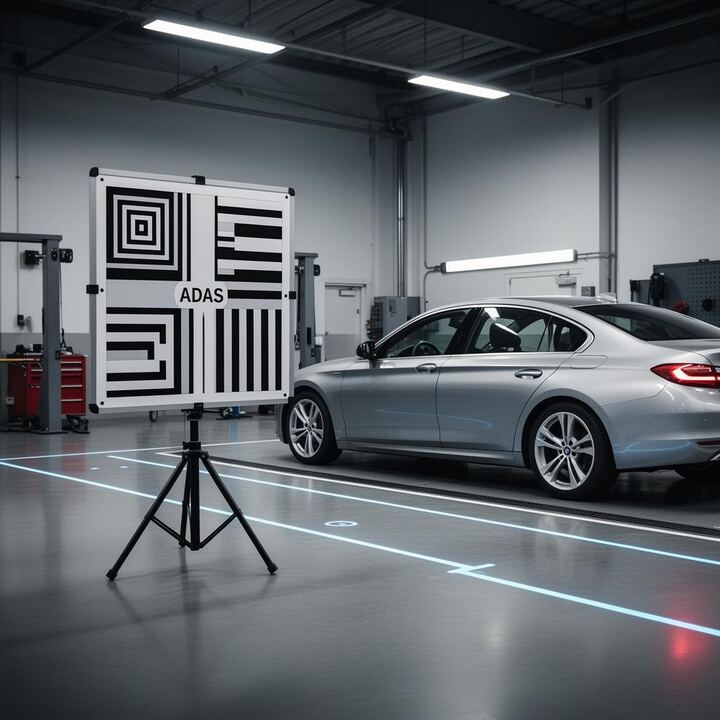
Genesis ADAS calibration planning requires Genesis-specific service information, even when a system appears similar to one used by another make in the same corporate family. The estimator should identify the VIN, installed camera or radar configuration, repair event, and linked procedure before selecting calibration, variant coding, a function check, or another initialization. A shared component concept does not prove a shared trigger or sequence.
Genesis also publishes its own collision-scanning position. It calls for a pre-repair scan to support accurate repair planning and a post-repair scan to confirm systems are communicating, calibrated where required, and free of unresolved diagnostic trouble codes. I-CAR CRN-2402 reproduces that make-specific position. Scanning and physical calibration remain separate evidence within that workflow.
How should a shop research Genesis calibration triggers?
The shop should start with the Genesis VIN and current service channel, identify the installed system, and follow the actual component and body-repair procedures. Trigger events can include windshield work, camera removal or replacement, a deformed bracket, radar removal and installation, collision damage near a mounting point, bumper work, body-mount adjustment, or replacement of a related control unit. The exact vehicle procedure decides which of those events applies.
A 2023 GV60 calibration verification record shows the level of component detail that may be needed. In that specific vehicle example, the forward camera has triggers involving removal or replacement, a deformed bracket, a diagnostic condition, and windshield replacement. The record separately lists front radar, front and rear corner radar, and surround-view camera events, while finding no calibration requirement for the ultrasonic sensors reviewed. I-CAR CALV-4084 provides that model-specific evidence.
The GV60 record is not a universal Genesis table. It demonstrates why the estimator should name each component and use the current VIN procedure instead of copying an adjacent model's requirements.
Why do Genesis bumper repairs require sensor-zone planning?
Genesis bumper guidance calls for radar protection before refinishing. I-CAR reports that corner radar units should be masked or removed to prevent contamination, and that a damaged, contaminated, or oversprayed radar unit should be replaced and recalibrated. The same article discusses limited touch-up work, an optimized paint formula for the sensing area, and a recommendation against plastic repair in the applicable bumper context. I-CAR CRN-1636 is the exact make-specific source.
The estimator should identify the sensing area before authorizing bumper repair. Material condition, paint build, contamination, radar mounting, and calibration are related but distinct decisions. A successful calibration cannot validate an exterior repair that violates the Genesis bumper guidance, and compliant refinishing does not prove that a removed radar unit is aimed.
The repair file should show whether the radar stayed installed and protected, was removed and reinstalled, was replaced, or was exposed to overspray or damage. The current procedure then determines the calibration, coding, or check required for that event.
Is variant coding the same as radar calibration?
No. A Genesis service campaign for certain 2022 G80 vehicles describes variant coding for rear corner radar units under a limited production condition. NHTSA document MC-10211698-0001 contains the exact campaign bulletin.
That bulletin should not be turned into a make-wide rule, and it does not say that every rear radar replacement follows the same campaign path. It does show why an estimate must distinguish electronic configuration from physical calibration. Coding tells a replacement module how it belongs in a specified vehicle configuration. Calibration establishes a physical or learned reference when the procedure requires it. A scan reports diagnostic status. Each operation needs its own result.
When a repair needs more than one of those steps, production should follow the order in the current procedure. Calling the whole sequence a radar reset makes it difficult to tell whether all required work actually finished.
How can camera and parking systems share inputs?
Genesis parking-assistance functions can combine rear ultrasonic sensors and a rear camera. I-CAR's Hyundai and Genesis research explains that the driver parking-assistance system uses those different inputs together. I-CAR CRN-1963 provides that shared-system context.
Shared function does not mean shared calibration. In the 2023 GV60 example, surround-view camera triggers are listed separately, while no ultrasonic-sensor calibration requirement was found. The estimator should therefore research each component rather than assume that one completed operation closes the entire parking feature.
A function concern after repair may also need diagnosis before calibration. The file should show whether the issue involves camera view, sensor mounting, communication, configuration, a diagnostic fault, or another cause.
Which Genesis initializations are not ADAS calibrations?
Genesis service information includes other post-repair initializations. I-CAR lists examples involving steering limits, windows, and the sunroof. I-CAR CRN-1678 supports those make-specific distinctions.
Those steps should remain separate from forward-camera, radar, or surround-view calibration. A steering initialization may be required in the same repair sequence without proving that a driver-assistance camera is aimed. Clear estimate lines and closeout records prevent one operation from being credited as another.
What year and model ranges are useful for planning?
The 2022 G80 campaign and 2023 GV60 calibration record are specific examples, not an exhaustive Genesis library. They establish that configuration and component requirements can differ even among recent vehicles. The shop should use them to recognize the need for research, not to infer procedures for another model year or nameplate.
Genesis-specific information should remain the load-bearing source. An existing Hyundai make page can provide related corporate context, but it should not replace the Genesis procedure when the vehicle, service channel, or published instruction is distinct.
What should be ready before mobile calibration?
Genesis readiness begins at the named sensor, not the feature label. Corner radar must be protected from refinish contamination and evaluated under the bumper instruction. Cameras, brackets, glass, fascia, mounts, and surround-view attachment points must be final where their procedure depends on them. Any geometry correction, electronic configuration, scan diagnosis, tire or load condition, and camera view should be completed in the stated sequence.
The booking record should identify the Genesis VIN, model year, affected component position, actual repair trigger, bumper or glass decision, variant-coding status when applicable, and the exact procedure. The procedure then determines whether controlled stationary space or a road sequence is required. This avoids importing a Hyundai setup assumption into a Genesis job.
What makes a Genesis release gate different from a Hyundai shortcut?
Genesis should have its own release gate even when a system concept resembles one used by Hyundai. The first question is not whether the brands share a platform or feature name. It is whether the Genesis VIN and service information identify the same component, trigger, sequence, and result.
The gate begins with the repair event. A 2023 GV60 verification record, for example, distinguishes forward-camera, front-radar, corner-radar, and surround-view-camera events. I-CAR CALV-4084 found no ultrasonic-sensor calibration requirement for that reviewed vehicle. That is a narrow, vehicle-specific finding. It should help a planner avoid an unsupported ultrasonic calibration line, but it should not be promoted into a rule for every Genesis.
The second check is component condition. Genesis bumper guidance summarized by I-CAR calls for corner radar to be masked or removed during refinishing and addresses damaged, contaminated, or oversprayed units. It also discusses touch-up work, a sensing-area paint formula, and a recommendation against plastic repair. Those requirements belong to the bumper and sensor-condition decision before the calibration line is released.
The third check is electronic scope. A limited 2022 G80 campaign bulletin uses variant coding for a stated rear-corner-radar condition. That bulletin proves that coding can be a separate operation. It does not establish a universal G80 calibration trigger or a make-wide campaign. The estimator should preserve the bulletin scope when it is relevant and use the current procedure for collision work.
The final check is closeout. Genesis's updated scanning position requires pre-repair and post-repair scan work and connects post-repair review with communication, calibration status, and unresolved diagnostic codes. The scan result, coding result, physical calibration result, bumper repair record, and functional verification should remain distinct. Only then can the repair file show what was performed, what was verified, and what remains unresolved.
What documentation should return?
The record should identify the vehicle, component, trigger, procedure, method, prerequisites, and result. It should label scanning, coding, calibration, function checks, and unrelated initializations separately. If the procedure is blocked or incomplete, the record should state the cause and next step instead of implying a pass.
Shops can also review the Hyundai make page, why a clean scan is not calibration evidence, forward-camera calibration, front-radar calibration, and surround-view camera calibration.
For a make-specific calibration request, a shop can send the VIN and repair details to service@focaladas.com or call (206) 460-0999. Focal ADAS confirms the applicable procedure, vehicle readiness, and scheduling before the visit.
Frequently asked questions
Can a Hyundai procedure be used for a Genesis vehicle?
Not when Genesis publishes a distinct VIN-specific procedure or service instruction. Corporate relationship and similar system concepts do not prove that triggers, sequence, configuration, or closeout are identical.
Why must Genesis radar be protected during bumper refinishing?
Genesis guidance calls for masking or removing corner radar to prevent contamination and addresses replacement and recalibration when the unit is damaged, contaminated, or oversprayed. Repairability and calibration remain separate decisions.
Is variant coding the same as Genesis radar calibration?
No. A limited G80 campaign shows variant coding as an electronic configuration operation. Physical calibration, scanning, coding, and functional verification answer different questions and need separate results.
Does every Genesis parking sensor require calibration?
No. A 2023 GV60 verification record found distinct camera and radar events but no ultrasonic-sensor calibration requirement for that reviewed vehicle. The current procedure for the actual VIN must control.
What should a Genesis calibration request include?
The shop should send the VIN, model year, installed system, repair event, glass or bumper work, disturbed components, alignment status, scan findings, configuration work, and exact current procedure reference.
Sources
- I-CAR, Genesis Position Statement: Pre- and Post-Repair System Scanning - UPDATE, CRN-2402 https://rts.i-car.com/crn-2402.html
- I-CAR, Bumper Cover Repair With ADAS: Genesis, CRN-1636 https://rts.i-car.com/crn-1636.html
- I-CAR, Calibration Verification: 2023 Genesis GV60, CALV-4084 https://rts.i-car.com/calv-4084.html
- Genesis G80 rear-corner radar campaign bulletin, NHTSA document MC-10211698-0001 https://static.nhtsa.gov/odi/tsbs/2022/MC-10211698-0001.pdf
- I-CAR, Additional Calibration Requirements: Genesis, CRN-1678 https://rts.i-car.com/crn-1678.html
- I-CAR, Calibration Research Tips: Hyundai/Genesis Driver Parking Assistance System, CRN-1963 https://rts.i-car.com/crn-1963.html
Focal ADAS handles it on-site, same day, from Seattle to Tacoma.
Put calibration on autopilot.
Request a calibration in 60 seconds. A reply with an arrival window comes back within the hour.